BrokenPrinter and the Aesthetic of Imperfection: A Guide to Disruptive Display Fonts
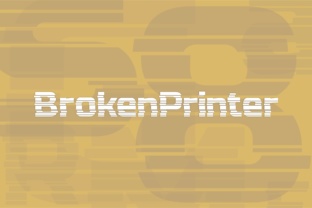
Typography has a language of its own. Every font carries a mood, a history, and a purpose. Among the vast landscape of typefaces, one category stands out for its deliberate rejection of perfection: the broken print effect font. BrokenPrinter is a display font that features disruptive lines, creating a deliberately glitched, distressed, or fragmented look. It mimics the output of a malfunctioning printer—streaks, missing parts, uneven ink, and misalignment—turning what was once a technical failure into a creative statement.
For general readers, this might sound like a niche tool for designers, but BrokenPrinter and similar fonts have found a surprising home in modern culture, branding, and digital communication. This article explores what BrokenPrinter is, why it matters, how it fits into contemporary creativity, and how you can use it effectively—even if you have no design background.
What Exactly Is BrokenPrinter?
At its core, BrokenPrinter is a display font designed to look like a printout that has gone wrong. Imagine a dot matrix printer running out of ribbon, a laser printer with a scratched drum, or an inkjet cartridge that leaves gaps in the text. These imperfections are built into the font’s letterforms as deliberate features. Characters may appear torn, smudged, partially erased, or overlaid with static-like lines.
Unlike traditional fonts that aim for clarity and consistency, BrokenPrinter embraces inconsistency. Each glyph can look slightly different from the next, giving the text an organic, unpredictable feel. This unpredictability is what makes the font so effective for certain applications. It is not intended for lengthy body text—reading a paragraph set in BrokenPrinter would be exhausting and impractical—but for headlines, logos, posters, and short bursts of text where impact matters more than readability.
The Broken Print Effect as a Design Language
The broken print effect is part of a larger movement in design that values authenticity, rawness, and tactile imperfections. In a world of crisp screens and perfect vectors, glitch art, distressed typography, and broken effects offer a human touch. They remind us of the physical world—of paper jams, fading ink, and worn-out machinery. This aesthetic is often associated with:
- Vintage and retro styles – mimicking old photocopies, faxes, or typewriters.
- Cyberpunk and glitch culture – representing digital decay or hacked systems.
- Punk and underground zines – rejecting polish and embracing DIY chaos.
- Streetwear and urban branding – creating grit and rebellious energy.
BrokenPrinter falls squarely into this territory. It is a tool for designers and creators who want to break the rules of clean, corporate typography.
Purpose and Significance: Why Use a Broken Font?
If readability is the primary goal of most typography, why would anyone choose a font that is intentionally hard to read? The answer lies in the emotional and psychological impact of the broken print effect. Fonts like BrokenPrinter do more than convey words—they convey a feeling.
1. Creating Mood and Atmosphere
A broken font immediately sets a tone. It can feel unsettling, mysterious, urgent, or rebellious. For a horror movie poster, a broken print effect suggests something is wrong—perhaps a message from a distorted reality. For a music festival, it signals alternative culture and nonconformity. The font itself becomes part of the storytelling.
2. Standing Out in a Crowded Visual World
In an era of endless digital content, grabbing attention is harder than ever. A clean, standard sans-serif font might be ignored, but a broken, glitched headline stops the eye. Its uniqueness forces the viewer to pause and engage. This is why BrokenPrinter is popular for event flyers, album covers, apparel designs, and social media graphics.
3. Signaling Authenticity and Edge
Brands that want to communicate a non-corporate, independent, or underground vibe often turn to distorted fonts. BrokenPrinter says “we are not trying to be perfect,” which can be a powerful message in a polished world. It appeals to audiences who value raw expression over slick marketing.
BrokenPrinter in Modern Life, Work, and Creativity
The broken print effect is not just for artists. It has practical relevance across multiple domains. Understanding where and how to use it can open new creative possibilities for anyone—from small business owners to educators.
In Business and Branding
Small businesses, especially those in creative industries like tattoo shops, record stores, skate shops, and indie cafes, use broken fonts to project a distinct identity. A logo featuring BrokenPrinter can feel handcrafted and personal. Even mainstream brands occasionally adopt this style for limited-edition packaging or campaign headers to capture a subcultural audience. However, it is essential to pair a broken display font with clean, legible body type to maintain professionalism.
- Use sparingly – broken fonts work best for short, impactful words or phrases.
- Balance with negative space – let the font breathe so the distortions remain readable.
- Consider color – high contrast backgrounds often exaggerate the broken effect.
In Education and Non-Formal Communication
Educators teaching design, art, or media studies can use BrokenPrinter as an example of expressive typography. It demonstrates how type can carry meaning beyond the literal text. For students, experimenting with broken fonts helps them understand the relationship between form and function. In non-formal settings like community workshops or zine-making, broken print fonts encourage playful, low-stakes creativity.
In Technology and Digital Media
The broken print aesthetic has a natural home in digital art, glitch photography, and web design. It is often used in error pages (think: playful 404s), game interfaces, and interactive installations. Some designers combine BrokenPrinter with CSS animations to simulate real-time flickering or static, making the text feel alive. The overlap between analog broken print and digital glitch creates a compelling hybrid aesthetic.
Examples That Bring the Concept to Life
To understand BrokenPrinter fully, let us look at concrete scenarios where it shines.
Example 1: A Concert Poster
Imagine a poster for a punk band called Static Noise. Using BrokenPrinter for the band name, the letters appear to crackle with missing dots and streaks, evoking the sound of a broken amplifier. The date and venue are set in a simple sans-serif font below. The broken print effect creates immediate energy and aligns with the band’s raw sound.
Example 2: A Social Media Quote Graphic
A quote like “Perfection is boring” rendered in BrokenPrinter on a dark background with a subtle scan-line effect. The font reinforces the message: flaws are beautiful. The graphic is shareable because it looks handcrafted and irreverent.
Example 3: A DIY Zine Cover
In a photocopied zine about urban exploration, the title Forgotten Spaces uses BrokenPrinter to mimic faded, worn signage. The irregularities of the font match the theme of decay and rediscovery. Pairing it with rough paper textures completes the aesthetic.
Clarifying Common Misunderstandings
Because broken print fonts look like errors, some people assume they are simply damaged versions of normal fonts. This is not accurate. BrokenPrinter is deliberately crafted. Every line, gap, and distortion is placed intentionally by a type designer. It requires more skill to create a functional broken font than a standard one, because the designer must ensure the text remains readable while appearing chaotic.
Another misunderstanding is that broken fonts are only for “edgy” or dark content. While they do suit rebellious aesthetics, they can also be used playfully, humorously, or even nostalgically. A children’s book about robots might use a broken print font to sound like a robot’s malfunctioning speech. The context always determines the tone.
How to Choose and Use BrokenPrinter Effectively
If you are new to working with display fonts, here is a simple guide to getting started with BrokenPrinter or similar broken print typefaces.
Step 1: Pick the Right Weight and Style
BrokenPrinter often comes in multiple variants. Some versions are lightly distressed (just a few streaks), while others are heavily fragmented. For a first project, start with a milder weight so the text remains recognizable. Use the more extreme versions for single-word emphasis.
Step 2: Test Readability at Different Sizes
A broken font that looks great at 100px may become illegible at 30px. Always preview your text at the actual size you plan to use. If you need to include smaller text, reserve the broken effect for the headline and choose a simpler font for subtext.
Step 3: Pair with a Neutral Background
Because the font itself is busy, place it on a plain or subtly textured background. A busy background combined with a broken font creates visual noise that confuses the eye. Let the font be the centerpiece.
Step 4: Use Intentionality
Every design choice should have a reason. If you use BrokenPrinter, ask yourself: Does the broken print effect support my message? If you are promoting something clean and trustworthy, a broken font will work against you. But if your message is about disruption, creativity, or imperfection, it is a perfect match.
Broader Understanding: Where BrokenPrinter Fits in Typography
Typographers classify fonts into categories: serif, sans-serif, script, display, and more. BrokenPrinter belongs to the display font category, which includes any typeface designed for large sizes and decorative purposes. Display fonts are meant to be seen, not read at length. They are the showstoppers of typography.
The broken print effect specifically relates to the concept of distressed typography, which has existed for decades. What makes BrokenPrinter unique is its direct reference to printer malfunction—a digital-age phenomenon that resonates with anyone who has dealt with a finicky printer. It connects the physical experience of hardware failure to the digital world of type design.
Conclusion: Embrace the Broken
BrokenPrinter is more than a font—it is a design philosophy that finds beauty in flaws. In a culture obsessed with high resolution and flawless finishes, broken print effects remind us that imperfection can be expressive, authentic, and memorable. Whether you are designing a poster, building a brand, experimenting with digital art, or teaching others about typography, BrokenPrinter and the broken print aesthetic offer a powerful tool for non-formal, impactful communication.
So the next time you see a headline that looks like it came from a dying printer, do not call it a mistake. Call it a choice. And now, you understand exactly why it was made.