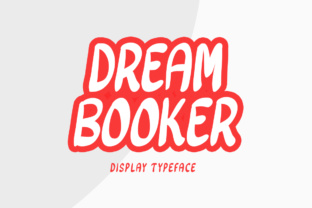
Dream Booker: The Bold Display Font That Commands Attention in Modern Design
In an era where digital noise is at an all-time high, capturing and holding audience attention has become the central challenge for creators, marketers, and entrepreneurs alike. Every pixel of screen real estate competes for a split-second glance, and every printed piece must earn its keep in a cluttered visual landscape. Typography, often the unsung hero of design, has emerged as a decisive factor in whether a message lands or gets lost. Enter Dream Booker — a display font that doesn't merely sit on the page but announces itself with confidence. With its thick, eye-catching outline and contemporary presence, Dream Booker is purpose-built for projects where stopping the scroll is non-negotiable.
This article explores what makes Dream Booker a standout asset, how it aligns with broader shifts in design and communication, and why professionals across industries are integrating it into their visual toolkit. Whether you are a freelancer refining your brand identity, a marketer crafting a campaign, or an entrepreneur launching a product, understanding the role of bold typography in today's context can sharpen your creative decisions.
What Is Dream Booker? A Display Font Designed for Impact
At its core, Dream Booker is a display typeface defined by a pronounced, thick outline that gives each glyph a sculpted, weighty presence. It belongs to the category of display fonts — typefaces designed primarily for headlines, titles, posters, and other applications where size and visual impact take precedence over extended reading comfort. Unlike body text fonts that prioritize legibility at small sizes, Dream Booker thrives at larger scales, where its bold contours and structured geometry can be fully appreciated.
What sets Dream Booker apart is its careful balance between boldness and readability. Many heavy display fonts sacrifice clarity for weight, resulting in cramped or muddy letterforms. Dream Booker, by contrast, maintains open counters and clear distinctions between characters, even when used at substantial sizes. This makes it suitable not only for traditional print applications like billboards and packaging but also for digital interfaces where quick recognition is critical.
The font's outline treatment is not merely decorative; it serves a functional purpose. In a world where content is consumed on everything from tiny smartwatch screens to sprawling desktop monitors, a thick outline ensures that letters retain their shape and contrast against busy backgrounds. Whether overlaid on a photograph, set against a vibrant gradient, or placed on a textured surface, Dream Booker holds its ground.
The Rise of Bold Typography in a Fragmented Attention Economy
To understand why a font like Dream Booker is gaining traction, it helps to look at the broader landscape of visual communication. Over the past decade, design trends have oscillated between minimalist restraint and maximalist expression. Yet one constant has emerged: the need for immediate visual hierarchy. As users scroll through social feeds, browse websites, or walk past storefronts, they make split-second decisions about what deserves their attention. Typography is often the first signal that guides that decision.
Bold display fonts have become a shorthand for confidence and clarity. Brands that lead with strong typography signal that they have something to say and are not afraid to say it. Dream Booker fits squarely into this paradigm. Its thick outlines and assertive presence communicate authority without aggression, making it suitable for a wide range of tones — from energetic and playful to sophisticated and commanding.
Consider the rise of brand activations and pop-up experiences in physical retail. These temporary environments rely on instant recognition and emotional impact. A poster using Dream Booker can convey the essence of a brand in a single glance, without relying on supporting imagery or lengthy copy. Similarly, in the digital realm, thumbnail design for video content, social media carousels, and landing page headers all benefit from type that grabs attention before a single word is read.
Moreover, the accessibility conversation in design has pushed typography to the forefront. Fonts with high contrast and clear shapes improve readability for users with visual impairments. Dream Booker's outline structure inherently offers strong contrast against most backgrounds, reducing the cognitive load required to parse text. This aligns with the growing expectation that design should be inclusive by default, not as an afterthought.
Why Creators and Marketers Are Paying Attention to Dream Booker
Adoption of a new typeface rarely happens in a vacuum. It reflects a convergence of changing needs, shifting preferences, and evolving workflows. Several factors are driving interest in Dream Booker among professionals.
1. The Demand for Versatile Display Assets
Modern creators often work across multiple media — print, web, video, and environmental design. A font that performs consistently across these contexts reduces friction in the production process. Dream Booker's outline treatment translates well to embroidery, foil stamping, and laser engraving, making it a favorite among product designers and small-batch manufacturers. Its digital rendering is equally reliable, with smooth curves and stable weights that avoid the jagged edges sometimes seen in outline fonts at small sizes.
2. The Shift Toward Expressive Brand Identities
Brand identity design has moved away from sterile, corporate uniformity toward more distinctive and memorable expressions. Companies large and small are investing in custom typography or carefully curated type pairings to differentiate themselves. Dream Booker offers an off-the-shelf solution that still feels bespoke. Its unique outline structure provides instant recognition, which is precisely what brands need in a crowded marketplace. For a startup launching a new product line, using Dream Booker across packaging, web, and social media can create a cohesive visual language without requiring a full custom type design.
3. The Rise of Short-Form Video and Motion Graphics
With platforms like TikTok, Instagram Reels, and YouTube Shorts dominating content consumption, motion typography has become a critical skill for marketers. Fonts that work well in static layouts often fail in motion — they can become unreadable when animated, or their details can get lost at small sizes. Dream Booker's bold outlines make it highly resilient in motion graphics. Words animated with scale, rotation, or position changes remain legible, and the outline adds a subtle dynamism as it interacts with background elements. This makes it a go-to choice for creators producing quick-turnaround video content.
4. Changing Expectations Around Print and Digital Collateral
Even as the world goes digital, print remains a powerful touchpoint for establishing credibility. Business cards, brochures, event signage, and direct mail all benefit from typography that commands attention. Dream Booker's thickness translates into physical presence on the page. A business card set in Dream Booker feels substantial; a poster becomes a statement piece. For freelancers and consultants who rely on printed materials to make a first impression, this kind of typographic weight can be the difference between being remembered and being overlooked.
Practical Applications Across Industries
To move beyond theory, let's explore how Dream Booker is being used in practice across different professional contexts.
Branding and Identity Design
Brand designers are incorporating Dream Booker into logo wordmarks, especially for brands in the creative, lifestyle, and hospitality sectors. A boutique hotel might use it for its name on a facade, while a craft beverage company could feature it on labels. The font's outline lends itself well to duotone and multicolor treatments, allowing designers to create layered logo variations that work across light and dark backgrounds.
Event and Campaign Graphics
For limited-time campaigns or event promotions, Dream Booker provides the urgency and impact that temporary messaging requires. Concert posters, festival signage, and product launch announcements benefit from its ability to convey energy without shouting. When paired with a clean sans-serif for body copy, it creates a clear hierarchy that guides the viewer's eye from headline to details.
Web and UI Design
In digital interfaces, Dream Booker is best used sparingly — as a hero section headline, a call-to-action label, or a pricing table header. Its weight ensures that critical information is seen first, which directly supports conversion goals. UX designers are increasingly recognizing that typographic hierarchy is not just about aesthetics but about user behavior. A bold headline using Dream Booker can reduce bounce rates by immediately communicating value.
Packaging and Merchandise
Product packaging is a high-stakes environment where shelf visibility translates directly into sales. Dream Booker's thick outlines make it legible from a distance, which is crucial in retail settings. Merchandise designers are also using it for apparel prints, tote bags, and accessories, where the bold shapes hold up well in screen printing and embroidery.
Broader Insights: What the Attention to Dream Booker Tells Us About Design Today
The growing interest in Dream Booker is not just about one font. It reflects a larger shift in how professionals think about visual communication. Several key insights emerge from this trend.
First, differentiation matters more than ever. In a globalized marketplace, generic design gets ignored. Fonts like Dream Booker offer a way to inject personality without reinventing the wheel. They provide a shortcut to distinctiveness that is especially valuable for small teams and independent creators who lack the resources for custom development.
Second, versatility is non-negotiable. A tool that only works in one context is increasingly hard to justify. Dream Booker's ability to transition from print to digital to motion makes it a practical investment. Professionals are looking for assets that earn their keep across multiple projects and platforms.
Third, boldness is not the enemy of elegance. There is a persistent misconception that heavy typefaces are crude or unsophisticated. Dream Booker challenges that notion with its refined proportions and thoughtful detailing. It demonstrates that impact and subtlety can coexist — a lesson that applies to design strategy as a whole.
Finally, the best tools enable rather than restrict. Dream Booker gives designers a strong foundation to build upon. Its inherent character reduces the need for excessive decoration or supporting elements, streamlining the design process. For busy professionals, this efficiency is a significant advantage.
Conclusion: Making Dream Booker Part of Your Creative Practice
Dream Booker is more than a passing trend in display typography. It is a response to the real-world demands of modern visual communication — where attention is scarce, context is varied, and the cost of being overlooked is high. For professionals, creators, entrepreneurs, and marketers looking to elevate their projects, integrating a font like Dream Booker into their toolkit offers a straightforward path to greater impact.
Whether you are designing a brand identity from scratch, refreshing a campaign, or building content for social media, consider where bold, confident typography can do the heavy lifting. Dream Booker provides the structure and presence to make your message seen and remembered. In a noisy world, that kind of clarity is invaluable.
Explore Dream Booker for your next project and experience how a single typeface can transform the way your audience perceives your work.