Manttiss: A Modern Marker Font Family for Distinct Visual Communication
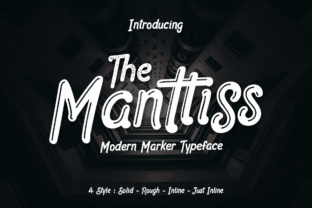
Choosing the right typeface can significantly influence how a message is received. Among the many options available, Manttiss stands out as a modern marker font that offers versatility through four distinct versions: Solid, Inline, Rough, and Just Inline. Each version brings a different personality to the page, making Manttiss a flexible choice for designers, content creators, and brand professionals who want a hand-drawn feel without sacrificing readability.
What Manttiss Is and What Makes It Distinct
Manttiss is a typeface designed to mimic the look of marker-drawn lettering. It carries the organic, slightly uneven quality that comes from writing with a physical marker, yet it is refined enough for digital use across various media. What sets Manttiss apart from many other marker fonts is its range of stylistic variations. Instead of offering one static look, Manttiss provides four distinct versions that allow users to shift the tone from bold and solid to light and textured.
The Solid version delivers a dense, confident stroke that works well for headlines and short statements. The Inline version uses a thinner interior line that creates a more open, airy appearance, suitable for situations where you want the hand-drawn character without heavy visual weight. The Rough version adds intentional texture and grit, giving the lettering a worn or distressed effect that feels immediate and tactile. Finally, the Just Inline version strips things down further, offering only the outline structure of the letters with minimal filling, which can be useful for layered designs or subtle applications.
This range means that Manttiss is not a one-size-fits-all font but rather a small ecosystem of related styles. Having access to all four versions within a single family allows you to maintain visual consistency while adjusting the mood or emphasis of your text.
Comparing Manttiss with Other Marker-Type Options
When evaluating Manttiss, it helps to consider what other marker-style fonts typically offer. Many marker typefaces provide a single style, often with a rough or casual appearance. While that works well for informal projects, it can limit your ability to create hierarchy or contrast within a design. With Manttiss, you have the flexibility to pair a Solid heading with an Inline subheading or use Rough for accent text, all while keeping the same underlying letterforms.
Another common alternative is brush script fonts, which tend to have more fluid, connected strokes and a calligraphic feel. Manttiss, by contrast, is more aligned with marker lettering that uses disconnected, blocky strokes. This makes it better suited for projects that require a modern, straightforward hand-drawn look rather than decorative script. If your project calls for a clean but personal touch, Manttiss offers a middle ground between the formality of a sans-serif and the looseness of a handwritten script.
Some marker-style fonts also lack the refinement needed for longer passages of text. Manttiss, particularly in its Solid and Inline versions, maintains enough legibility for short to medium-length phrases, though it is still best used for display purposes rather than extended body copy.
Strengths and Tradeoffs of Each Version
Understanding the strengths and tradeoffs of each Manttiss version helps you choose the right tool for your specific project.
Solid Version
The Solid version is the boldest of the four. It offers high contrast against light backgrounds and reads clearly even at smaller sizes. Its strength lies in its readability and presence. If you need a headline that demands attention without shouting, Solid is a reliable choice. However, because it is dense, it can feel heavy when used in large blocks or at very large sizes. Pairing it with generous letter spacing can help maintain clarity.
Inline Version
The Inline version uses a stroke that is thinner and more delicate. This version works well when you want a hand-drawn look but need to keep the design light or when you are layering text over images or patterned backgrounds. Its tradeoff is reduced visibility at smaller scales. The thin lines may get lost in busy layouts or when printed at small point sizes. It is best reserved for medium to large display use where its subtlety can be appreciated.
Rough Version
The Rough version introduces intentional texture and irregular edges. This gives the text a raw, almost stenciled quality that feels tactile and spontaneous. It is ideal for projects that need an edgy, street-art, or industrial vibe. The tradeoff is that the roughness can reduce legibility, especially for longer words or at smaller sizes. Use it sparingly and at larger sizes to preserve readability while capturing the desired aesthetic.
Just Inline Version
The Just Inline version is the lightest of the family, consisting only of an outline. This creates a skeletal, open form that can be used as an overlay, for coloring in, or for a minimalist hand-drawn effect. Its main limitation is that it offers the least visual weight, so it works best in combination with other elements or as a secondary accent. It may not be suitable for standalone headlines unless the design intentionally calls for an ultra-light, sketchy look.
Best-Fit Situations for Manttiss
Manttiss is a strong choice for projects where you want to communicate a sense of human touch, creativity, or informality without resorting to overly casual or childish lettering. Some realistic applications include:
- Branding for creative businesses: Coffee shops, art studios, bakeries, and small retail brands often benefit from the approachable yet modern feel of marker fonts. The range of versions lets you create a consistent brand voice across signage, packaging, and digital assets.
- Posters and flyers: Whether for events, workshops, or sales, Manttiss adds a handcrafted quality that stands out from standard typographic treatments. Using Solid for the main message and Inline for supporting details creates natural hierarchy.
- Social media graphics: Short quotes, announcements, and promotional graphics on platforms like Instagram or LinkedIn can feel more personal with a marker font. The Rough version, in particular, can add visual interest to otherwise flat designs.
- Product packaging: Manttiss can be used for product names, ingredients, or short descriptors on labels where a handmade aesthetic aligns with the brand identity.
- Editorial and layout accents: In magazines, zines, or digital publications, using Manttiss for pull quotes or section headings introduces texture and contrast against body text set in a serif or sans-serif.
When Manttiss May Not Be the Right Choice
As with any typeface, Manttiss has limitations. It is not designed for long-form reading. Its marker-drawn structure, while charming in display settings, becomes tiring and less legible in paragraphs or at small sizes. For body copy, a conventional serif or sans-serif font will serve your readers better.
Additionally, if your project requires a polished, corporate, or highly formal tone, Manttiss may feel too casual. Law firms, financial institutions, and luxury brands often need typefaces that convey stability and precision rather than hand-drawn spontaneity. In those contexts, Manttiss could undermine the intended message.
The Rough and Just Inline versions, while visually interesting, may also pose accessibility challenges. Readers with visual impairments or cognitive processing difficulties may struggle with the reduced contrast and irregular edges. If accessibility is a priority, reserve these versions for decorative elements and rely on the Solid version for primary content.
Decision Factors When Choosing Manttiss
When deciding whether Manttiss is the right font for your project, consider these factors:
- Context and audience: Are you communicating with a creative, casual, or youthful audience? Manttiss works well in informal and artistic contexts but may fall flat in professional or conservative settings.
- Scale and medium: Will the text be large or small? Printed or digital? The Solid version holds up at smaller sizes, while the Inline and Just Inline versions require more space to remain legible.
- Need for variety: If your design uses multiple levels of text, having four versions within one family can save time and ensure consistency. If you only need one style, a simpler marker font might suffice at a lower cost or complexity.
- Pairing with other fonts: Manttiss pairs well with clean sans-serif fonts for body copy or with serif fonts for a contrast between modern and traditional. Avoid pairing it with another highly textured or handwritten font, as the result can feel cluttered.
Practical Examples of Using Manttiss
Imagine you are designing a poster for a local music event. You could use Manttiss Solid for the event name in large size, Manttiss Inline for the date and venue in medium size, and Manttiss Rough for a genre tag or featured artist name. The three versions share enough visual DNA to feel cohesive, yet each one signals a different level of importance.
For a bakery logo, you might use Manttiss Solid for the business name and Manttiss Just Inline for a tagline like "baked daily." The contrast between the solid, confident name and the light, sketchy tagline creates a friendly, handmade impression without needing multiple unrelated fonts.
In a social media campaign for an art supply store, Manttiss Rough could be used for product callouts to evoke the texture of charcoal or pastel, while the Solid version handles the main offer. The Rough version reinforces the tactile nature of the products, making the visual language match the brand experience.
Making an Informed Decision
Manttiss offers a thoughtful range of marker-style options that give designers and content creators room to express different tones within a unified visual system. Its strengths lie in its versatility, readability at display sizes, and the ability to create hierarchy through stylistic variation rather than relying on multiple unrelated fonts.
At the same time, it is not a universal solution. Consider the context, audience, and medium before committing. For projects that call for a modern hand-drawn feel with room to adjust weight and texture, Manttiss provides a practical and distinctive toolset. For projects that require formal tone, high accessibility, or extended body text, other typefaces will be more appropriate.
By understanding what each version of Manttiss does well and where it falls short, you can make a more intentional choice that serves both your design goals and your audience's needs.