Northern Highway: A Practical Look at This Retro Font Duo for Design Work
Typography choices often define the emotional tone of a project, and few styles carry as much immediate character as well-executed vintage lettering. When a typeface manages to balance nostalgia with modern usability, it becomes a genuinely useful tool rather than just a stylistic novelty. Northern Highway is one such offering: a retro-inspired font duo that provides two distinct stylistic paths while maintaining a cohesive visual identity. This article examines what Northern Highway offers, how it performs in practical settings, and who might benefit most from adding it to their toolkit.
What Northern Highway Actually Is
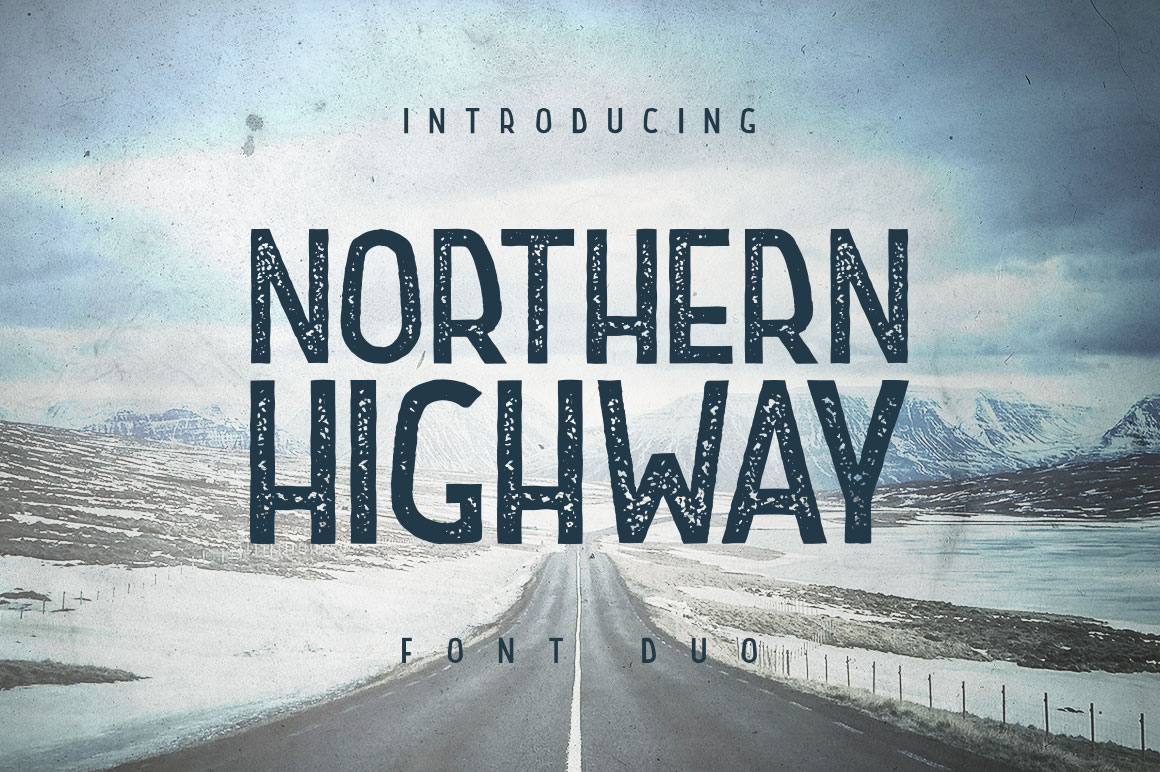
Northern Highway is a two-style typeface family built around a minimal, clean vintage aesthetic. The font comes in two versions: Clean and Rough. The Clean style delivers a crisp, untextured appearance that retains the retro proportions and character shapes without any surface wear. The Rough style introduces a gritty, distressed texture that gives the lettering an edgy, worn-in feel reminiscent of mid-century signage, weathered prints, and aged materials.
What sets this pair apart from a simple clean-and-dirty variant is the intentionality behind the rough texture. The distress is not random noise applied as an afterthought. It follows the contours of each glyph in a way that mimics natural wear—chipping at edges, fading in pressure points, and creating a tactile illusion that holds up at display sizes. The clean version, by contrast, is genuinely clean: no faux-vintage shortcuts, just straightforward letterforms with retro proportions and carefully considered spacing.
The duo format is practical. You are effectively getting two distinct type treatments from a single purchase, and because both styles share the same underlying structure, they can be mixed within a composition without creating visual conflict. This makes Northern Highway more versatile than a single distressed font that forces a rough look into every application.
Minimal but Expressive Letterforms
Northern Highway does not rely on excessive ornamentation. The shapes are relatively restrained, with consistent stroke weights and open counterforms that keep the text readable even at smaller sizes. The vintage character comes primarily from the proportions—slightly condensed widths, subtle variations in vertical stress, and details like tapered terminals that reference hand-painted signage and mid-century typography. This minimalist approach means the font works well in contexts where a clean, legible vintage look is needed without the distraction of overt decorative flourishes.
Two Distinct Textures for Flexible Use
The Clean style is well-suited for body text in moderate sizes, headlines that require clarity, and any application where the vintage proportions need to come through without surface noise. It also works as a base layer when you want to apply your own texturing in software. The Rough style brings immediate atmosphere. The grit is noticeable but not overwhelming—enough to suggest age and use without sacrificing legibility or appearing gimmicky. This makes it effective for packaging, poster work, social media graphics, and merchandise where a tactile, handcrafted feel adds value.
Mix-and-Match Versatility
Because both styles share matching metrics and spacing, you can combine them freely within a single layout. A headline in Rough can sit above body copy in Clean without looking mismatched. You might use Clean for subheadings and Rough for pull quotes, or alternate between the two across a multi-page document to create subtle shifts in tone. This kind of flexibility reduces the need to purchase separate font families for different parts of a project.
Readability at Different Sizes
In testing, Northern Highway holds up well at display sizes from around 24 points upward. The rough texture becomes more visible as size increases, which is expected, but the letterforms remain identifiable and the distress does not overwhelm the shapes. At text sizes below 16 points, the Clean style is the better choice. The Rough style at small sizes can cause some stroke details to blend together, particularly in heavier weights or on lower-resolution screens. For body copy in print, Clean at 10–12 points with adequate leading remains comfortable to read, though the retro proportions mean it works best in short passages rather than extended text blocks.
Application in Print vs. Digital
The font performs well in print environments, especially on uncoated or textured paper stocks where the rough style can echo the physical surface. The clean style prints cleanly on any stock and reproduces reliably at various sizes. For digital use, the rough style works effectively in headlines and accent text, though it benefits from careful testing on lower-resolution displays where some of the finer grit may alias or become less defined. The clean style is more predictable across screens and resolutions.
File Format and Technical Quality
Northern Highway is delivered in standard formats that integrate smoothly with major design software. Kerning is consistent across both styles, and the glyph set includes basic Latin characters, numerals, punctuation, and common accented letters. The font does not include extensive language support for Central or Eastern European character sets, which is worth noting if your projects require broad multilingual coverage. Overall spacing is generous enough to give the vintage aesthetic room to breathe, but you may want to adjust tracking on certain headline applications depending on the specific look you are after.
Small Business Owners and Independent Creators
If you run a business that wants to project a nostalgic, handcrafted, or Americana-inspired identity, Northern Highway provides a cohesive visual language. Coffee roasters, bakeries, breweries, woodworking studios, barbershops, and apparel brands can use the duo across labels, menus, signage, websites, and packaging without needing multiple type families. The rough style works particularly well for logos and badges, while the clean style handles product descriptions and contact details.
Freelance Designers and Agencies
For designers who work on brand identities, editorial layouts, or packaging, Northern Highway offers a reliable tool for projects that call for a vintage feel without a full custom type solution. The ability to switch between clean and rough within a single layout saves time and ensures visual consistency. It is also useful for mockups and client presentations where you want to communicate a specific aesthetic direction early in the process.
Marketers and Content Creators
Social media graphics, promotional materials, and email headers that need to stand out with a retro edge can benefit from the rough style's texture. The clean style works well for blog headers, presentation titles, and printed collateral where professionalism and clarity are priorities. Northern Highway gives content creators a way to introduce vintage character without resorting to overused decorative fonts that lack typographic rigor.
Educators and Publishers
For educational materials, historical publications, or editorial content with a retro theme, the clean style provides a legible option that still carries period flavor. The rough style can be used sparingly for chapter openings, sidebars, or pull quotes to add visual interest without compromising readability of the main text.
Limitations and Honest Considerations
No typeface is universal, and Northern Highway has boundaries worth acknowledging. The font's vintage proportions and moderate x-height mean it is not ideal for lengthy body copy in books or reports. It is a display-oriented family that works best in headlines, short passages, and accent text. If your primary need is an extended text face for long-form reading, this is not the right choice.
The rough style, while well-executed, may not suit every brand voice. Businesses aiming for a polished, contemporary, or minimalist aesthetic in the modern sense will likely find the texture too specific. Similarly, the clean style, though minimal, still carries strong retro cues that may not fit corporate or technical contexts.
Multilingual support is limited to common Western European languages. If you regularly work with Eastern European, Cyrillic, or non-Latin scripts, you will need to supplement Northern Highway with additional typefaces for those character sets.
Finally, the font's effectiveness depends on pairing. Because Northern Highway has a distinct personality, it works best when combined with neutral sans-serif or simple serif typefaces for supporting text. Pairing it with another highly stylized font can create visual competition rather than harmony.
How to Get the Most Out of Northern Highway
Start by using the clean style for your primary layout structure—headlines, subheadings, and key body copy at moderate sizes. Introduce the rough style selectively: for the main title, for logo text, or for accent elements like pull quotes, badges, or decorative text blocks. Avoid applying rough texture to everything, as this can quickly feel noisy and diminish the impact of the distressed details.
Experiment with color treatments. The rough style responds well to single-color applications on textured backgrounds, while the clean style works across solid colors, gradients, and reversed-out text. Consider using the clean style for reverse type on dark backgrounds and the rough style for positive type on lighter, textured surfaces.
Test both styles in black, white, and one or two accent colors before committing to a full layout. The rough texture can behave differently depending on color contrast and background complexity. A simple palette often lets the vintage character of the font speak more clearly.
Final Thoughts on Northern Highway
Northern Highway succeeds because it delivers a specific aesthetic without overcomplicating the user experience. The two-style duo format provides genuine flexibility, and the execution of both clean and rough variants shows an understanding of how vintage typography works in practice—not just how it looks in isolation. The font is not trying to be everything to everyone, and that clarity of purpose is a strength.
For designers, business owners, and content creators who need a reliable vintage typeface that can move between clean presentation and gritty character, Northern Highway is a practical addition to a font library. It serves its intended role well, and with thoughtful application, it can elevate projects that benefit from a touch of retro authenticity. As with any specialized tool, the key is matching it to the right work. When the project calls for vintage spirit with modern usability, Northern Highway earns its place in the conversation.