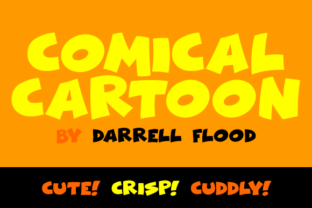
Comical Cartoon: A Playful Display Font with Serious Design Potential
Every designer knows the feeling. You have a project that needs personality—something loud, funny, or slightly unhinged—but most fonts feel too serious or too polished. That's where Comical Cartoon steps in. Created by Darrell Flood, this decorative sans serif font leans into a tilted, whacky look that immediately signals fun. It's not trying to be elegant or subdued. Instead, it invites you to break the rules a little and let your creativity run loose.
What Makes Comical Cartoon Stand Out
At first glance, Comical Cartoon hits you with its off-kilter energy. The characters are intentionally uneven, with a tilted baseline that mimics hand-drawn lettering. This isn't a font that hides its quirks. Every letter feels like it was sketched quickly, with a marker or brush, by someone who was having a good time. The strokes are bold and confident, with rounded edges that soften the overall impression. It's a display font through and through—meant to grab attention rather than blend into long paragraphs.
The personality here is unapologetically playful. Think comic book speech bubbles, carnival banners, or retro arcade signage. It carries a sense of nostalgia but doesn't feel dated. The tilted, uneven structure gives it movement, as if the letters are about to jump off the page. For projects that need a shot of humor or irreverence, this creative font delivers without trying too hard.
Where Comical Cartoon Shines in Real Projects
This font isn't for body text. You wouldn't set a 500-word blog post in it, and that's by design. Instead, Comical Cartoon thrives in short, punchy applications where the message matters as much as the mood. Here are some places it works exceptionally well:
Logo Design and Brand Identity
Small businesses, especially in food, entertainment, or creative services, often struggle to find a typeface that feels approachable without looking amateurish. Comical Cartoon bridges that gap. A food truck brand selling loaded fries or gourmet hot dogs could use it in their wordmark and instantly communicate casual, delicious fun. A children's party planner might pair it with bright colors and see bookings rise. It gives small brands a distinct voice without needing a full custom illustration.
Packaging Design
Walk down the candy aisle or look at craft soda labels. So many products rely on modern typography that feels corporate or minimal. Comical Cartoon brings back the handmade vibe. It works beautifully on limited-edition snack boxes, artisanal popcorn bags, or even beer labels for a playful ale. The tilted letters catch the eye on a crowded shelf, making the product feel accessible and fun before the customer even reads the ingredients.
Social Media Graphics and Web Design
Scrolling through Instagram or TikTok, the competition for attention is fierce. A static, perfectly aligned headline often blends in. Comical Cartoon, with its inherent motion, stops the thumb. Use it for promotional banners, call-to-action buttons, or highlight reels. On a website, it can anchor hero sections or accent headings, especially for brands built around humor, creativity, or youthfulness. Just keep it short—a single word or a short phrase—and let the font do the heavy lifting.
Editorial and Publishing Projects
Comic strips, children's books, and zines are obvious matches. But also consider magazine pull quotes, chapter titles in humorous non-fiction, or subheadings in travel guides aimed at backpackers. The font adds a layer of informality that makes content feel less intimidating and more inviting. Readers associate the tilted, whacky shapes with spontaneity and joy, which can increase engagement with the material.
How Comical Cartoon Affects Readability and Visual Hierarchy
Because Comical Cartoon is a display font, its role in visual hierarchy is clear: it leads. When you place it above a paragraph set in a neutral sans serif, it anchors the page. The eye goes to the playful headline first, then moves down to the supporting text. That contrast is what makes layouts work. A sans serif font for body copy paired with Comical Cartoon for headings creates a rhythm that feels both professional and approachable.
Readability, however, requires care. The tilted characters can slow down reading if used in longer strings. Keep headlines under eight words. Avoid using all caps with this font—the asymmetry becomes harder to parse. Instead, let the natural upper-and-lowercase shapes breathe. For accessibility, make sure the contrast ratio between the font color and background is high enough. A bright yellow on white might wash out the lighter strokes. Dark backgrounds or bold outlines help the letters pop.
Practical Guidance for Designers and Business Owners
If you're considering Comical Cartoon for a project, start by evaluating the fit. Ask yourself: does the tone of this project align with playful, spontaneous, or humorous? If the answer is yes, you're on the right track. If the project leans luxury, corporate, or serious, keep looking. This commercial font earns its keep when the brand voice matches its energy.
Testing Font Pairings
Pairing is where many designers get stuck. Comical Cartoon has such a strong personality that it needs a calm partner. Stick to simple, neutral sans serif fonts like Montserrat, Open Sans, or Lato for body text. If you want a bit more character, try a clean handwritten font that shares the casual vibe but stays more legible. Avoid pairing it with another decorative or script font—the page will feel chaotic. One loud voice is enough; let everything else support it.
Reviewing Included Styles and Licensing
Before committing, check what's included in the font package. Comical Cartoon may come with multiple weights or just one standard style. For most display work, a single weight is sufficient, but having an outline or shadow variant can expand your options. Pay attention to commercial licensing if you're using it in client work, merchandise, or packaging design. Darrell Flood's terms typically cover standard usage, but confirm whether your specific application—like a logo for resale or a product line—requires an extended license.
Readability Considerations Across Media
Printed materials handle this font well, especially at larger sizes. Business cards, posters, and T-shirt graphics all work because the bold shapes hold up at distance. For web design, test it on mobile screens first. The tilted letters can sometimes look cramped on small viewports. Increase letter spacing slightly—2–3%—to give each character room to breathe. For social media graphics, consider adding a subtle drop shadow or white outline to improve legibility over busy backgrounds.
Real-World Examples That Bring the Font to Life
Imagine a local brewery releasing a seasonal IPA called "Zigzag." The can design uses a bright orange background with Comical Cartoon for the name, set at a 15-degree angle. Below it, a clean sans serif lists the ABV and ingredients. The total effect is energetic and approachable—exactly what a craft brewery wants for a summer release.
Or think about a children's educational YouTube channel. The channel logo uses Comical Cartoon in bold yellow with a blue outline. Thumbnail titles follow the same style, making videos instantly recognizable in a feed. Parents appreciate the friendly look, and kids respond to the playful shapes. The font becomes part of the brand identity, building recognition over time.
For a more personal project, consider a handmade greeting card line. Each card features a single word in Comical Cartoon—like "Oops!" or "Congrats!"—with a simple illustration. The font carries the emotional weight while keeping production costs low. No need for custom lettering when the premium font already delivers personality.
Why Comical Cartoon Belongs in Your Design Toolkit
Not every project needs a serious, restrained typeface. Some of the most memorable brands and campaigns succeed because they made people smile. Comical Cartoon gives you a shortcut to that reaction. It's a tool for breaking through the noise, for signaling that your brand doesn't take itself too seriously. Whether you're designing a logo, building a website, or putting together social media assets, having this font in your arsenal means you're ready when the brief calls for fun.
Darrell Flood has created something that balances whimsy with utility. It's not a niche novelty font that you use once and forget. It's a reliable workhorse for display purposes—a creative font that brings genuine character to every project it touches. Download Comical Cartoon, test it against your current projects, and see where a little tilt can take your designs.