Trapstyle: A Handwritten Font Built with a Ruling Pen for Strategic Design
In the crowded landscape of digital typefaces, few fonts carry the raw, unfiltered character of Trapstyle. Created with a ruling pen—a tool traditionally reserved for calligraphy and expressive lettering—this handwritten font delivers an unmistakable energy that standard digital scripts rarely achieve. For entrepreneurs, marketers, creators, and professionals who need to communicate authenticity without sacrificing impact, Trapstyle offers a shortcut to the look of custom hand-lettering. But like any powerful tool, its value depends entirely on how thoughtfully it is used. This article explores the strategic considerations behind adopting Trapstyle, when it serves your goals, and how to avoid the common pitfalls of using a font this distinctive without a clear plan.
What Makes Trapstyle Different from Other Handwritten Fonts
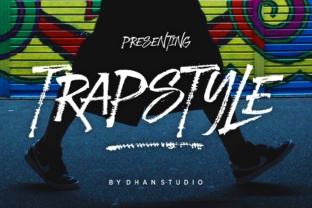
Most handwritten fonts aim for neatness, consistency, or a generic “script” look. Trapstyle does the opposite. Because it was drawn with a ruling pen—a nib that creates thick and thin strokes based on pressure and angle—each letter carries a spontaneous, almost aggressive texture. The result is a font that tears through text with visible dynamism. This is not a font for quiet sophistication. It is for situations where you want the viewer to feel the hand of the maker behind the words. That authenticity is exactly why Trapstyle can be strategically useful for branding, packaging, and any other context where human touch matters more than mechanical perfection.
For decision-makers evaluating design assets, Trapstyle represents a trade-off. You gain immediate visual personality and the aura of bespoke hand-lettering, but you lose the neutrality required for long-form reading or conservative industries. Recognizing that trade-off early allows you to deploy the font where its strengths align with your objectives.
Strategic Value: When Trapstyle Supports Your Goals
Using Trapstyle intentionally is about matching the font’s expressive voice to the message you need to send. Consider the following scenarios where its energy can directly support your planning and outcomes:
- Brand differentiation. In markets saturated with sleek sans-serif logos, a logo built around Trapstyle signals that your brand values individuality and craft. A small-batch coffee roaster, a music festival, or a boutique creative agency can all benefit from that hand-drawn first impression.
- Headlines and short statements. Because Trapstyle is highly textured, it works best in short bursts. A poster for a live event, a social media quote graphic, or a hero section on a landing page can leverage its spontaneity to capture attention in under a second.
- Product packaging. When a product needs to communicate artisanal quality, Trapstyle conveys that the label was handwritten by someone who cares. Hand-lettered-style packaging often commands higher perceived value, and Trapstyle achieves that effect without the cost of a professional lettering artist for every SKU.
- Creative presentations and mood boards. For designers and educators presenting concepts, Trapstyle adds a layer of raw creativity that signals “in progress” or “experimental.” This can be useful in brainstorming phases where you want to avoid a finished, polished look that closes down options.
In each of these use cases, the font is not chosen randomly. It is selected because the goal—whether differentiation, attention, authenticity, or creative energy—aligns with what Trapstyle naturally provides.
Planning Tips: How to Integrate Trapstyle Thoughtfully
Before you download Trapstyle and apply it to your next project, take a moment to plan its role. Thoughtful integration starts with asking a few questions:
- Who is my audience? If your readers are primarily older professionals or operate in a highly regulated industry (finance, law, healthcare), Trapstyle may seem out of place. If your audience skews younger, creative, or values non-corporate vibes, the font will resonate.
- What is the reading context? Trapstyle is not built for body copy. Its irregular stroke widths and dramatic angles make extended reading tiring. Reserve it for titles, short phrases, or a single signature line.
- What contrasting fonts will I pair it with? One of the font’s greatest strengths is its ability to create visual tension when placed next to a clean, minimalist typeface. Pair Trapstyle with a neutral sans-serif like Helvetica, Inter, or Montserrat. The contrast emphasizes both fonts: the clean font provides readability and structure, while Trapstyle provides personality. Avoid pairing it with another decorative script—that usually creates visual noise.
- How will I test legibility? Test Trapstyle at different sizes and on different backgrounds. On a dark background or at small sizes, the ruling pen strokes can bleed together and become illegible. Always preview your specific application before finalizing.
These planning steps shift the font from a decorative afterthought to a deliberate strategic asset. They also reduce the risk of a design that looks chaotic rather than intentional.
Risks of Using Trapstyle Without Clear Goals
Every tool carries risk when applied without a strategy. Trapstyle is no exception. The most common pitfalls include:
- Readability failures. Using Trapstyle for long sentences or small text sizes will frustrate readers. If someone has to strain to decipher your headline, you have lost them.
- Mismatched brand voice. A font this energetic can overwhelm a brand that wants to convey reliability and calm. If your core message is trust and stability, a wild ruling pen script will introduce unintended dissonance.
- Overuse within a single design. Using Trapstyle for every element—headline, subhead, body, caption—creates a chaotic and unprofessional look. The font demands restraint. One or two instances per layout is usually enough.
- Cultural or contextual misalignment. Not all audiences interpret handwritten fonts the same way. In some contexts, hand-lettering feels personal and inviting; in others, it can seem amateurish or unserious. Know your cultural context before committing.
By anticipating these risks, you can make informed decisions about where to deploy Trapstyle and where to pull back. The goal is to use the font as a precise instrument, not a blanket solution.
Practical Examples: Trapstyle in Action
To ground these ideas, consider three realistic scenarios where Trapstyle supports specific objectives:
Example 1: A coffee roastery label. A small roastery wants its bags to feel handcrafted. They use Trapstyle for the blend name (“Ethiopia Yirgacheffe”) on the front, paired with a clean sans-serif for origin details and brewing instructions on the back. The result: an artisanal look without paying a lettering artist for each new batch.
Example 2: A music festival poster. The festival’s aesthetic is gritty, indie, and energetic. The main headliner name is set in Trapstyle at 72pt over a dark, textured background. Supporting information (dates, lineup, venue) appears in a modern sans-serif at the bottom. The contrast between raw hand-lettering and clean information hierarchy makes the poster both eye-catching and readable.
Example 3: A personal blog header. A freelancer writing about creative entrepreneurship uses Trapstyle for her blog title in the header. The rest of the site uses a readable serif for articles. The handwritten title conveys personality and warmth, while the body text ensures reading comfort. This alignment between brand voice (creative, individual) and font choice strengthens her positioning.
Each of these examples reflects a decision-making process that prioritizes clarity, contrast, and context.
Long-Term Value: Consistency and Efficiency in Design
One of the most underappreciated benefits of a font like Trapstyle is the consistency it brings over time. For businesses that produce regular content—social media posts, email headers, product labels—using the same distinctive font creates a recognizable visual thread. Over months and years, that repetition builds brand recognition. Without Trapstyle, achieving a consistent hand-lettered look would require either a dedicated designer or a variable handwriting process that is hard to standardize. The font solves that operational challenge.
Additionally, Trapstyle saves time. Custom hand-lettering for a single project can take hours or days. By using a typeface that replicates that effect, you can produce the same visual impact in minutes. For small business owners and marketers who need to move quickly, that efficiency is a legitimate strategic advantage.
However, long-term value depends on resisting the temptation to change fonts too often. If you switch from Trapstyle to another decorative font every few months, you lose the consistency that builds recall. Choose it with the intention of committing to it for a set period or across a defined product line.
Decision-Making Guidance: Is Trapstyle Right for Your Next Project?
When evaluating whether to use Trapstyle, ask yourself these three questions:
- Does the project need to communicate energy, spontaneity, or authenticity? If the answer is yes, Trapstyle can be a strong candidate. If the priority is clarity, professionalism, or authority, look elsewhere.
- Can I control the context? Will the font appear on a large poster, a digital banner, or a product label where you can test legibility? Or will it be embedded in a system where users might resize it unpredictably? Control matters.
- Have I defined the contrast? Have you already selected the contrasting font that will do the heavy lifting for readability? If not, plan that pairing first. Trapstyle works best when it is the accent, not the main voice.
These questions help move the decision from “this font looks cool” to “this font serves my purpose.” That shift is the difference between design that works and design that distracts.
Beyond the Font: A Tool for Intentional Communication
Trapstyle, like any design tool, is what you make of it. Its ruling pen origins give it a texture that no ordinary digital font can replicate. That texture can be your greatest asset or your biggest liability, depending on how you plan its use. By approaching Trapstyle as a strategic element rather than a decorative whim, you align your design choices with your broader goals—whether those goals involve building a brand, launching a product, or communicating a creative vision.
The most effective designers and marketers understand that every font carries baggage. Trapstyle’s baggage is energy, imperfection, and raw human touch. If that matches the story you are trying to tell, use it with intention. Pair it with contrast, test its limits, and respect its constraints. When you do, Trapstyle will tear through your text in exactly the way you intended—with unmistakable energy that your audience will feel, remember, and act on.