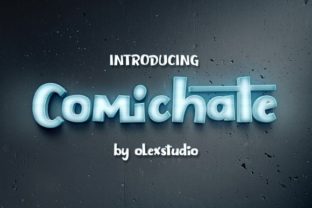
Comichate: A Fun Display Font for Creative Projects
If you’ve been browsing font libraries hoping to find something that stands out without screaming for attention, Comichate offers a refreshing middle ground. This display font brings a playful spirit to the table while keeping readability high—a combination that isn’t always easy to achieve. Whether you're a designer working on brand identity or a hobbyist putting together a birthday invitation, Comichate adapts to the mood of your project. Its rounded forms and steady weight give it a friendly, approachable look that still feels deliberate and crafted. In a landscape packed with over-the-top decorative fonts, Comichate earns its place by being both fun and functional.
What Makes Comichate Stand Out Among Display Fonts
At first glance, Comichate walks the line between a handwritten font and a structured sans serif. The letterforms are clearly defined with consistent stroke thickness, which helps maintain legibility even at smaller sizes. This is a deliberate design choice—too many display fonts sacrifice clarity for personality, leaving readers squinting at headlines. Comichate avoids that trap. Its characters have a gentle bounce, but the baseline remains steady enough to not feel chaotic. The result is a typeface that feels energetic without being exhausting.
From a stylistic perspective, Comichate fits into the modern typography trend that favors authentic, human-made aesthetics. It doesn't try to be perfect, and that’s part of its appeal. The slightly uneven edges and natural curves give it a hand-drawn quality that connects with audiences on a personal level. For branding, this translates into a visual identity that feels approachable and trustworthy. For craft projects, it adds a layer of warmth that sterile sans serif fonts often lack. It’s a creative font that doesn’t try too hard, and that restraint is what makes it work across so many different contexts.
Where Comichate Shines: Real-World Applications Across Industries
One of the strengths of Comichate is its range. It performs well in both digital and print environments, which makes it a versatile asset for content creators and entrepreneurs alike. Here are a few areas where it genuinely delivers:
- Logo Design and Brand Identity: Because Comichate is a premium font with a distinct voice, it works beautifully for startups and small businesses that want to project creativity and reliability. A logo set in Comichate immediately signals that the brand is modern and approachable. Think of local cafes, boutique shops, or creative agencies that want to stand out on a shelf or screen. The font’s personality becomes part of the brand story.
- Editorial and Web Design: In magazines, blogs, or landing pages, Comichate excels as a headline font. It pairs well with clean sans serif fonts for body text, creating a clear visual hierarchy. The contrast between a playful headline and a neutral body font draws readers in while keeping the content readable. It’s especially effective for pull quotes or section headers where you want to inject energy.
- Social Media Graphics and Advertising: On platforms where attention spans are short, Comichate’s legibility and personality help messages cut through the noise. Whether it's an Instagram quote or a Facebook ad headline, the font adds a human touch that static typefaces miss. It also works well for story titles and lower thirds in video content, maintaining clarity even on small mobile screens.
- Packaging and Product Design: For product labels, stickers, or packaging boxes, Comichate brings energy to the shelf. It works particularly well for food, lifestyle, and kids’ products where a friendly tone is key. The font’s readability ensures that ingredients, product names, and instructions remain accessible without losing character.
- Craft Projects and Personal Use: Hobbyists will appreciate how Comichate gives scrapbooks, T-shirts, and party invitations a professional finish. Because it’s easy to read, it works for longer messages too—not just short phrases. Whether you’re stenciling a quote on a canvas or printing custom stationery, the font maintains its charm across different materials and scales.
How Comichate Influences Readability, Hierarchy, and Brand Perception
Typography is more than just decoration; it shapes how audiences perceive a brand. Comichate, being a display font, naturally commands attention when used for headings and titles. Its personality sets the tone for the entire piece. When you pair it with a neutral serif font or a clean sans serif, you create a visual hierarchy that guides the reader’s eye naturally from headline to body copy. This is especially useful in editorial design where you want distinct sections without relying on heavy graphics.
Readability is where Comichate really earns its keep. Many display fonts that lean playful become unreadable at small sizes or when used repeatedly. Comichate’s consistent letter spacing and x-height mean it holds up well even in a paragraph of all caps—though for body text, you’ll still want to pair it with a simpler typeface. For short bursts like call-to-action buttons or product names, it’s perfectly functional on its own. This balance makes it a reliable choice for packaging design where space is limited but legibility is critical.
From a brand perception standpoint, choosing a font like Comichate signals confidence. It says you don’t need to rely on sterile, corporate typefaces to appear professional. Instead, it embraces personality as a strength. Companies that use Comichate in their marketing often come across as more relatable, more human. This can lead to higher engagement, especially with younger or creative audiences. Consistency across materials—using Comichate for headlines, social graphics, and packaging—builds recognition over time, turning a simple typeface into a brand asset. Over repeated exposure, audiences begin to associate that friendly lettering with the brand’s core values.
Practical Guidance for Choosing and Using Comichate
Before you download Comichate, think about the specific needs of your project. Start by asking whether the font’s personality aligns with your brand’s voice. If your brand is serious, formal, or ultra-minimalist, Comichate might feel out of place. But if you’re after warmth, energy, or a handmade touch, it’s a natural fit. Evaluate the context: a children’s book will welcome it, while a law firm’s annual report probably won’t.
When evaluating the font, look at its included styles. A good premium font like Comichate should offer multiple weights—perhaps a regular, bold, and maybe an italic or outline version. The more weights available, the more flexibility you have for different applications. For example, using the bold weight for headlines and the regular for subheadings creates a consistent look without needing a second typeface. Check whether the font includes ligatures or alternate characters, which can add extra personality to logos or hero text.
Testing Font Pairings
Comichate pairs well with several serif and sans serif fonts. For a classic contrast, try a neutral sans serif like Helvetica or Open Sans for body text. If you want something more editorial, pair it with a serif font like Playfair Display for headings and Comichate for subheadings. The key is to let Comichate be the star while everything else supports it. Avoid pairing it with another busy display font, as that can create visual clutter. A quick test: set a headline in Comichate and a paragraph in your proposed body font; if the contrast feels natural, you’ve found a good match.
Readability Considerations
Because Comichate is a display font, it’s best reserved for short to medium text lengths. Use it for headlines, pull quotes, navigation labels, and logo text. For paragraphs, stick to a standard body font. Also, check how Comichate renders at different sizes—it should be crisp at 16px for digital and 10pt for print. Always test a few sentences in your layout before committing. Pay attention to leading and letter spacing; sometimes a little extra space between lines improves readability when the font has a bouncy baseline.
Understanding Commercial Licensing
Comichate is a commercial font, which means you need to purchase a license for most business uses. If you’re using it for personal projects like a party invitation, a free version might suffice, but for branding, marketing materials, or products for sale, a paid license is required. Always read the licensing terms to avoid issues down the line. Investing in a proper license also supports the font’s creator and ensures you have access to updates and support. When budgeting for design assets, consider Comichate an investment in your brand’s visual identity rather than just another expense.
In real-world use, I’ve seen Comichate transform simple flyers into eye-catching marketing pieces. One client used it for a local bakery’s tags and packaging, and the owner noted that customers frequently commented on the friendly feel of the labels. That kind of feedback doesn’t happen with generic fonts. It’s a reminder that typography isn’t just about looking nice—it’s about connecting with people. Another designer I know used Comichate for a tech startup’s launch materials, and the contrast between the playful font and the serious product helped humanize the brand, making it more approachable to early adopters.
Whether you’re a seasoned designer or just starting to build your brand identity, Comichate offers a reliable way to inject personality into your work. It’s available as a premium download from several font marketplaces, and with its broad applicability, it’s likely to become a go-to in your creative toolbox. Test it out on a few projects and see how it changes the way your audience interacts with your content. From packaging design to social media graphics, Comichate brings a consistent warmth that keeps your message clear and your brand memorable.