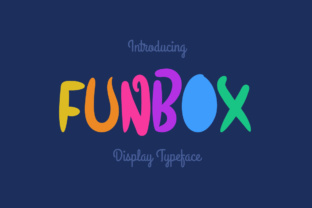
Funbox Font: Playful Display Type for Creative Projects
Typography is often described as the voice of a design. A well-chosen font can whisper elegance, command authority, or convey urgency. But what about a font that winks? That is precisely where Funbox enters the conversation. As a decorative display font designed for playful projects, Funbox brings an immediate sense of joy, nostalgia, and lightheartedness to any visual canvas. Whether you are designing a birthday invitation for a close friend or crafting a social media graphic that needs to stop the scroll, the distinctive contours of Funbox offer something standard serif or sans-serif fonts rarely provide: pure, unadulterated personality.
This article explores what makes a display font like Funbox tick, who benefits most from its cheerful character, and how to determine if it aligns with your specific creative or commercial goals.
What Exactly Is a Display Font Like Funbox?
Before diving into applications, it helps to understand the category. Display fonts are designed for short, impactful text rather than lengthy reading sessions. They are the headline act, not the supporting cast. Funbox fits neatly into this category. Its decorative nature means it shines brightest when used for titles, logos, packaging, posters, and short phrases.
For beginners, this distinction is crucial. Using a highly decorative font for a long paragraph of body text often results in poor readability, which can frustrate an audience. However, when Funbox is reserved for key words or phrases, it acts as an emotional anchor, instantly communicating a mood of fun, whimsy, or gentle retro charm. This clarity of purpose is what makes it a reliable tool rather than just a novelty.
Bringing Personal Projects and Hobbies to Life
For hobbyists and DIY creators, Funbox feels less like a tool and more like a creative partner. Consider the world of scrapbooking and digital journaling. Standard fonts can sometimes feel too sterile for a page filled with photos and mementos. Funbox adds a handmade or vintage flair that bridges the gap between digital convenience and tactile warmth. A simple "Our Adventure Begins" header in Funbox can immediately set the tone for a travel album or wedding scrapbook.
Similarly, if you are designing party decorations, invitations, or custom T-shirts for a family reunion, the font does much of the emotional work for you. Instead of relying on complicated graphics, the typography itself becomes the centerpiece. Beginners can easily install the font on their computer or upload it to platforms like Canva or Cricut Design Space, making it accessible even if you have no formal design training. The priority here is ease of use and emotional resonance, and Funbox delivers on both fronts.
A Branding Tool for the Approachable Business
Small business owners and entrepreneurs often face the challenge of standing out in a crowded marketplace. A brand that feels stiff or overly corporate can struggle to connect with customers looking for authenticity and warmth. This is where Funbox offers genuine commercial value.
Imagine a small bakery that specializes in custom cakes. Using Funbox for the word "Sweet" on a menu board or a to-go box instantly communicates the lighthearted, indulgent nature of the product. The same applies to handmade soap sellers, kids' clothing brands, or boutique toy stores. The font helps build a brand identity that feels friendly, approachable, and human.
The cost-benefit analysis for a business owner often comes down to licensing and versatility. A single quality display font can be used across multiple touch points—logos, social media posts, product labels, and signage—providing consistent branding without requiring a full design overhaul. When evaluating Funbox for commercial use, consider whether its playful tone aligns with your brand voice. If your business thrives on formality, it might not be the best fit. But if you want to convey creativity and accessibility, it can be a highly effective investment.
Why Professionals Keep Funbox in Their Toolkit
Freelance designers and creative professionals evaluate fonts based on a different set of criteria: flexibility, quality, and reliability. A decorative font is only useful if it has been carefully crafted. Professionals pay close attention to kerning, alternate characters, and how the font behaves at different sizes. Funbox, when well-made, offers the consistency needed for client work without sacrificing its playful spirit.
A skilled designer understands that even a whimsical font needs structure. Funbox can serve as an excellent counterbalance to more neutral, minimalist typefaces. For instance, pairing Funbox with a clean sans-serif like Open Sans or Montserrat creates an effective contrast. The playful header draws the eye, while the clean body text provides readability. This pairing strategy is a staple for posters, event flyers, and children's book covers.
For a freelancer working on a tight deadline, having a reliable display font like Funbox on hand means less time searching for the perfect typeface and more time executing the design. Its specific personality makes it a go-to choice for briefs that call for nostalgia, celebration, or informality. The long-term usefulness here lies in its ability to solve a recurring creative problem: how to make text feel genuinely warm and inviting.
Grabbing Attention in Education and Content Creation
Educators and content creators often compete for attention. Whether you are designing a worksheet for young students or a YouTube thumbnail for a lighthearted tutorial, the visual appeal of your content directly impacts engagement. Funbox helps signal that the content is meant to be enjoyed, not just consumed.
For a teacher, a worksheet header that reads "Math Puzzles!" in Funbox converts a standard handout into something that feels like a game. It lowers the intimidation factor and invites participation. For a blogger or social media influencer, using Funbox in a story highlight cover or a blog post title can create a cohesive, recognizable aesthetic that feels personal rather than templated.
The primary concern for this group is readability at different sizes. A good display font remains legible when scaled down slightly, but it is best used where it has room to breathe. In practice, this means using Funbox for the main headline and switching to a simpler font for subheads and body text. The visual contrast not only looks professional but also guides the viewer's eye naturally through the content.
Is Funbox the Right Fit for Your Project?
Choosing a font is a decision that balances aesthetics with function. To determine if Funbox matches your needs, consider the following points:
- Project Tone: Is the goal formal and authoritative, or casual and cheerful? Funbox leans heavily into the latter. If your project requires serious restraint, it may feel out of place.
- Audience: Are you appealing to children, nostalgic adults, or a creative community? A playful font resonates well with audiences looking for personality and warmth.
- Medium: Will the text appear large on a poster, or small on a label? Display fonts are most effective when they have space to shine. Avoid using them in long paragraphs or at very small sizes.
- Skill Level: Beginners will appreciate that Funbox looks great without much tweaking. Professionals will value its crafted structure and pairing potential.
- Longevity: Playful fonts tied to specific trends can feel dated quickly. However, classic retro-inspired styles like those seen in decorative display fonts often maintain a nostalgic appeal that transcends trends.
If your project needs a dose of whimsy and a human touch, Funbox is an excellent candidate. If you need to convey dense information or uphold strict brand guidelines, it might be better suited as an accent rather than the main voice.
Getting Started: Tips for Beginners and Pros
For those ready to try Funbox, the process is straightforward. After downloading the font file, installation takes just a moment on most operating systems. Once installed, it becomes available in any software that uses system fonts, from Microsoft Word to Adobe Illustrator.
For beginners, start by using Funbox in a familiar environment like Canva or a word processor. Create a simple greeting card or a social media post. Experiment with color and placement. Often, a white or brightly colored background allows the unique shapes of the font to stand out best. Avoid adding too many other decorative elements, as the font itself is already doing a lot of visual work.
For experienced users, push the font further. Experiment with tracking, layering, or adding subtle shadows to give the text dimension. Pair it with a minimalist layout to let the typography breathe. The contrast between a playful header and a clean, structured layout is often what makes a design feel both polished and approachable.
Ultimately, the right font does more than convey words. It sets a mood and invites a connection. Funbox, with its cheerful and decorative character, offers a direct way to inject warmth and personality into your work. By understanding its strengths, respecting its ideal use cases, and pairing it thoughtfully, you give your projects a voice that is genuinely hard to forget. Whether you are crafting a logo, decorating a memory book, or designing classroom materials, the value of a font that makes people smile should never be underestimated.