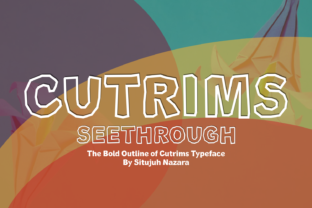
Cutrims Seethrough: Bold Outlines and Playful Overlay Typography
Typography is often the quiet backbone of design—until it isn’t. Sometimes a typeface steps forward not just to be read, but to be seen, felt, and played with. Enter Cutrims Seethrough, a distinctive variation of the Cutrims font family that strips everything back to a bold outline. No fill, no solid weight—just a strong, open contour that invites layering, experimentation, and a fresh kind of visual conversation. For creators, marketers, and everyday design enthusiasts, this typeface offers a low-effort, high-impact way to make words pop against colorful backgrounds. But why is a simple outline font relevant right now, and how can you put it to real use? Let’s explore.
What Makes Cutrims Seethrough Different?
At first glance, Cutrims Seethrough looks like a playful sketch—a thick, uniform outline that defines letterforms but leaves the interior empty. Unlike standard Cutrims, which includes filled versions and multiple weights, this Seethrough variant is purely a bold contour. That emptiness is its superpower. Because the letter interiors are transparent, the background color, pattern, or image shows through completely. This means you can place the text over a vibrant gradient, a busy photograph, or a textured pattern, and the letters will act as frames, drawing attention without overwhelming the underlying design.
This isn’t just a gimmick. In an era where screen fatigue is real and viewers scroll past cluttered visuals in seconds, clarity and contrast matter. Cutrims Seethrough provides a crisp, readable outline that works at various sizes—from large headers to medium-sized callouts—while letting the background do the heavy lifting. It’s a choice that feels both modern and nostalgic, recalling the hand-drawn lettering of old signage but executed with clean digital precision.
Why Outline Typography Is Gaining Attention
Over the past few years, design trends have shifted away from flat, safe choices. Bold minimalism, maximalist layering, and retro-futurism all demand type that can hold its own without dominating. Outlined fonts—especially those with bold strokes—have become go-to tools for achieving that balance. They offer legibility without a solid color block, which makes them ideal for overlaying on dynamic backgrounds like gradients, photos, or video frames.
Consider the current appetite for transparent design—think glassmorphism, frosted backgrounds, and see-through UI elements. Cutrims Seethrough fits naturally into this aesthetic. Its open forms echo the feeling of lightness and depth, giving designers a typographic way to echo visual transparency. Whether you’re building a landing page, a social media graphic, or a short video title card, this font adds an airy, modern touch without extra rendering work.
Another driver is the resurgence of display typography that feels handmade. Outlined letters often carry a casual, approachable vibe—less corporate, more human. For entrepreneurs and small business owners, using such a typeface can signal creativity and personality. It says, “This brand isn’t afraid to have fun.” And in a market where authenticity wins attention, that emotional cue is valuable.
How Cutrims Seethrough Fits Into Modern Workflows
For busy professionals and creators, time is precious. Cutrims Seethrough simplifies the design process in at least two ways. First, because it’s only an outline, you don’t need to manually remove fills or adjust opacity to achieve a see-through effect. The typeface does that for you. Second, it layers instantly over almost any background without the need for complex masking or knockout techniques. Drop it into your design software, set the size and color (the outline color), and you’re done.
Let’s walk through a realistic example. Imagine you’re a marketer creating a series of Instagram Stories promoting a summer sale. You want the word “SALE” to stand out but also let a bright, tropical photo show through. Using Cutrims Seethrough, you set the text color to white or black, place it over the image, and adjust the thickness (most design apps allow you to tweak stroke weight). The result: the letters become bold frames highlighting the beach scene behind them. The message is clear, the background remains visible, and the composition feels layered and intentional—all in under a minute.
For video editors and motion designers, the outline format works equally well. Because there’s no solid fill, you can animate the letters or change the background dynamically without keyframing a mask. This cuts production time for lower thirds, titles, or animated quotes. The bold stroke ensures legibility even at small sizes in motion.
Evolution of the Bold Outline Trend
Outlined typefaces are not new—think of stencil fonts, chalkboard lettering, or the classic Cooper Black outline. What has changed is the context and the tools. Digital design now offers precise control over stroke width, color, and layering. And audiences have grown accustomed to seeing transparent elements in apps, websites, and videos. The outline has evolved from a novelty into a practical design asset.
Cutrims Seethrough represents this evolution clearly. Its family, Cutrims, was originally designed with a sporty, angular feel—think athletic jerseys and bold headlines. The Seethrough variant keeps that energetic DNA but strips it down for maximum versatility. It bridges the gap between a fully fleshed-out display font and a lightweight decorative element. This flexibility is exactly what modern creators need: one typeface that can serve both as a primary hero headline and as a subtle overlay accent.
Also worth noting is how the font respects readability. Many outline fonts suffer from thin strokes or awkward gaps that make letters hard to read, especially at smaller sizes. Cutrims Seethrough uses a consistently bold contour, so even at 36pt or 48pt, the letterforms remain identifiable. The counters (the enclosed spaces inside letters like ‘o’ or ‘e’) are large enough to prevent the outline from closing in. This thoughtful balance shows that the design was crafted with practical use in mind, not just decoration.
Practical Implications for Creators and Professionals
Who stands to benefit most from adding Cutrims Seethrough to their toolkit? Let’s break it down by role.
Marketers and Social Media Managers
Speed and visual pop are everything in social media. With Cutrims Seethrough, you can create on-brand graphics quickly. Use it for quote cards over colorful backgrounds, for event promotions where the date and location need to be legible yet integrated, or for before-and-after comparisons where text overlays on product photos. The bold outline reduces the need for drop shadows or background shapes, keeping the design clean.
Graphic and Web Designers
For designers working on websites, brochures, or presentations, this font offers a way to add typographic interest without bloating the file size or the visual complexity. Pair Cutrims Seethrough with a solid, serif or sans-serif body font for contrast. Use it sparingly for key headings or call-to-action labels. The see-through quality can also reinforce a brand’s messaging about transparency, openness, or clarity.
Educators and Content Creators
When creating slides, handouts, or video thumbnails, you often need text that sits above an image. Cutrims Seethrough works beautifully for titles over lecture images or for YouTube thumbnails where you want the subject to remain visible behind the words. Its casual, friendly shape also fits well with educational content that aims to be approachable rather than stiff.
Hobbyists and DIY Entrepreneurs
Not everyone is a professional designer. Small business owners often create their own flyers, menus, or social posts. Using Cutrims Seethrough is forgiving—the clean outline means you don’t need perfect alignment or complex color choices. A simple black outline over a white-to-color gradient can look polished with zero effort. For those just starting out, this font reduces the learning curve and produces results that feel intentional.
Getting the Most Out of Cutrims Seethrough
Here are a few grounded recommendations based on real use:
- Choose backgrounds with strong contrast. Because the font is only an outline, the background color must be different enough from the stroke color. A white outline over a light yellow gradient might disappear. Test combinations: bold outline in black or white works universally; colored outlines (like a bright cyan) can match a brand palette as long as the background provides enough separation.
- Consider letter spacing. Outline fonts can sometimes look crowded if the letters are too close. Give Cutrims Seethrough a bit of breathing room by increasing tracking slightly. This improves readability and emphasizes the see-through effect.
- Layer with textures. Try placing the font over subtle noise, grain, or watercolor textures. The bold outline will anchor the word while the texture adds richness. This is especially effective for mood boards, invitation designs, or editorial headers.
- Use in moderation. Overusing any outline font can weaken its impact. Reserve Cutrims Seethrough for headlines, short callouts, or hero text. Let other typefaces handle body copy. The contrast between a solid body font and an outlined headline creates a dynamic hierarchy.
A Font for the Here and Now
Cutrims Seethrough is not trying to reinvent typography. It does something simpler and perhaps more valuable: it gives you a reliable, attractive outline option that works across media and contexts. In a design landscape that increasingly values flexibility, speed, and originality, this font fits without friction. Its bold strokes ensure visibility; its transparency invites creativity. Whether you are a seasoned designer or someone who just needs a quick, beautiful way to overlay text on a colorful background, Cutrims Seethrough offers a smart, playful solution that makes your work look intentional and fresh. Try it with a sunset gradient, a city skyline photo, or your brand’s signature pattern—and see how the letters frame your story without stealing the scene.