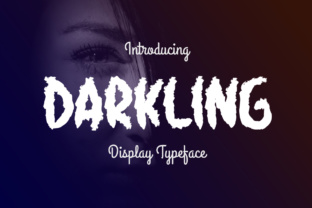
Darkling: A Strategic Approach to Decorative Display Typography
When you choose a typeface, you are not simply picking letters. You are shaping perception, directing attention, and reinforcing a message before a single word is fully read. Darkling, a decorative display font with very detailed irregular endings, offers a distinctive visual texture that can serve specific strategic purposes. But like any design tool, its value depends entirely on how intentionally you deploy it. This article explores what Darkling is, where it fits into a thoughtful communication strategy, and how to use it to support broader goals rather than simply decorating a page.
Understanding Darkling as a Design Asset
Darkling belongs to the category of display fonts, which are designed for use at larger sizes rather than for extended body text. What sets it apart is the deliberate irregularity of its letterforms, particularly the detailed, uneven terminals that give each character an almost handcrafted feel. This is not a neutral typeface. It carries personality, atmosphere, and a sense of deliberate imperfection. For entrepreneurs, marketers, and creators who want to evoke authenticity, craftsmanship, or a slightly raw aesthetic, Darkling can be a powerful element in the visual toolkit.
However, a decorative font like Darkling is not a universal solution. Its irregular endings and distinct character mean it works best when you understand the context, audience, and intended outcome. Using it without clear goals can undermine readability, dilute brand consistency, or create visual noise. The key is to treat Darkling as a strategic asset, not a random embellishment.
Aligning Font Choice with Broader Goals
Every communication decision, including typography, should connect back to your objectives. Whether you are building a brand, launching a product, creating educational materials, or designing a marketing campaign, the typeface you choose either supports or hinders your message. Darkling can support goals like differentiation, emotional resonance, and memorability, but only if you apply it with intention.
Differentiation: In crowded markets, standing out is essential. A font like Darkling, with its irregular endings and decorative flair, immediately signals that your content is not generic. It suggests a willingness to break from convention. For a small business owner or freelancer, this can be a low-cost way to create visual distinctiveness without a full rebrand.
Emotional resonance: The detailed irregularities in Darkling evoke handmade or artisanal qualities. If your brand values include craftsmanship, tradition, or organic processes, this font can reinforce that feeling. A publisher of literary works, a hobbyist selling handcrafted goods, or a educator presenting creative content may find Darkling aligns with the emotional tone they wish to project.
Memorability: Unusual or distinctive design elements are more likely to be recalled. Using Darkling for headings, logos, or key messages can increase the chance that your audience remembers what they saw. For marketers and bloggers, this can translate into stronger brand recall and higher engagement over time.
When to Use Darkling: Practical Scenarios
Knowing when to use Darkling is as important as knowing how. Below are realistic scenarios where this font can add value, along with considerations for each.
Headlines and Titles
Darkling shines at larger sizes where its irregular endings become visible details rather than distractions. Use it for article titles, section headers, or key calls to action. In a blog post or landing page, a Darkling headline can create an immediate visual anchor that draws the eye. Pair it with a clean, simple body font to maintain readability while letting the display type carry the personality.
Logo and Brand Identity
For a small business or personal brand, Darkling could function as a logotype or wordmark, especially if your brand identity leans toward the handcrafted, vintage, or unconventional. A freelancer offering creative services, a boutique store, or an educator running workshops might find that Darkling communicates approachability and attention to detail. However, test it across media, ensure it remains legible at smaller sizes, and consider how it behaves in black and white versus color.
Invitations, Certificates, and Special Publications
Printed materials that benefit from a sense of occasion are natural candidates for Darkling. Wedding invitations, event programs, certificates of completion, or limited-edition publications can use the font to signal that the content is special and carefully produced. The irregular endings add a tactile, hand-drawn quality that digital-native fonts often lack.
Social Media Graphics and Short-Form Content
In social media, where attention is fleeting, a distinctive font can stop the scroll. Using Darkling for quote cards, announcement graphics, or profile headers can help your content stand out in a feed. Keep the text short, test legibility on mobile screens, and avoid cluttering the design with additional decorative elements.
Strategic Considerations Before Committing to Darkling
Using a decorative font without planning can create more problems than it solves. Before you integrate Darkling into a project, evaluate the following factors.
Readability at small sizes: The irregular endings that make Darkling distinctive at large sizes can become muddy or confusing when scaled down. Avoid using it for body text, footnotes, or any content where quick, effortless reading is required. Reserve it for display purposes where size and spacing give the details room to breathe.
Brand consistency: If your brand already uses a specific typographic system, adding Darkling may create inconsistency unless you define its role clearly. Create usage guidelines: where Darkling appears, what sizes it works at, and which other fonts accompany it. This prevents random application that weakens brand recognition.
Audience perception: Not every audience responds well to decorative or unconventional typography. A corporate law firm, a medical practice, or a financial advisory service may find that Darkling undermines the trustworthiness they need to project. Conversely, a creative agency, a lifestyle blogger, or an artisanal food brand may benefit from exactly that quality. Know your audience and test their response if possible.
Platform limitations: Some web platforms, email clients, or printing services may not support custom fonts or may render them inconsistently. If you plan to use Darkling online, ensure you have a web font version, provide fallback options, and test across devices. For print, request a proof before committing to a full run.
Risks of Using Darkling Without Clear Goals
The most common mistake with decorative fonts is using them for their own sake, without connecting the choice to a strategic purpose. When Darkling is applied randomly, several risks emerge.
- Reduced readability: If used for body text or at small sizes, readers may struggle to parse words, leading to frustration and abandonment of the content.
- Visual clutter: Pairing Darkling with other decorative elements, multiple colors, or busy backgrounds can create a chaotic impression that distracts from the message.
- Brand inconsistency: Using Darkling in some materials but not others, or without clear rules, makes a brand look unfocused or amateurish.
- Short-lived novelty: A distinctive font can feel fresh initially, but if it is overused or applied without variety, it may lose its impact and become tiresome.
- Misaligned tone: A font that feels playful or handcrafted may clash with serious or technical content, confusing the audience about your intent.
These risks are not reasons to avoid Darkling. They are reasons to approach it with deliberation. When you understand the potential pitfalls, you can design around them and use the font to its full advantage.
Planning Your Approach to Darkling
To use Darkling effectively, treat it as a component of a larger system rather than a standalone decoration. Here is a planning framework that applies whether you are an entrepreneur, marketer, educator, or creator.
Define the role: Decide exactly what function Darkling serves in your project. Is it for headlines only? For logo text? For accent elements like pull quotes or initial caps? Defining the role prevents scope creep and keeps the font from spreading into areas where it performs poorly.
Choose supporting fonts: Darkling works best when paired with a neutral, highly readable body font. A clean sans-serif or a classic serif can provide contrast and let Darkling carry the personality. Test combinations to ensure they complement rather than compete.
Set size and spacing rules: Determine minimum sizes where Darkling remains legible and effective. Establish letter-spacing guidelines if the font needs adjustment for readability. Document these rules so that anyone working on your materials applies them consistently.
Test in context: Before finalizing any design, test Darkling in the actual medium where it will appear. A font that looks beautiful in a mockup may behave differently in a web browser, on a mobile screen, or in print. Run real-world tests with your target audience if possible.
Evaluate long-term fit: Consider whether Darkling will still serve your goals in six months or a year. Trends change, and a font that feels distinctive today may feel dated tomorrow. If you are building a long-term brand, choose a typographic strategy that can evolve or that includes timeless elements alongside trend-aware choices.
Using Darkling to Enhance Creativity and Productivity
Beyond branding and marketing, Darkling can also support internal goals like creativity and productivity. When used in mood boards, brainstorming materials, or internal presentations, a distinctive font can stimulate creative thinking by breaking routine visual patterns. For educators and facilitators, using Darkling in workshop materials or handouts can signal that the content is exploratory rather than formal, encouraging participants to think more freely.
Similarly, for creators and freelancers, working with a font that inspires can boost motivation and make the design process more enjoyable. The tactile, handcrafted quality of Darkling may help you stay connected to the artistic side of your work, even when dealing with practical constraints. However, keep the distinction between internal and external use clear. What works for your own creative process may not suit client-facing materials.
Long-Term Value of Intentional Typography
Typography is not a one-time decision. It is an ongoing practice that shapes how your audience perceives every piece of content you produce. By using Darkling intentionally, you build a visual language that reinforces your message, supports your goals, and adapts to new contexts over time. The long-term value comes not from the font itself, but from the discipline of making deliberate choices and evaluating their impact.
For small business owners and decision-makers, this means treating typography as an investment in brand equity. For marketers and bloggers, it means using design to improve engagement and recall. For educators and publishers, it means creating materials that are both beautiful and functional. And for freelancers and hobbyists, it means developing a personal style that sets your work apart without sacrificing clarity.
Darkling is a tool, not a solution. Its irregular endings and decorative character can add depth, warmth, and distinctiveness to your work, but only when you apply it with strategy and restraint. By understanding what it does well, where it falls short, and how to integrate it into a coherent system, you can use Darkling to communicate more effectively and achieve better results over the long term.
Ultimately, every font choice is a decision about how you want to be seen. Darkling gives you a particular kind of voice, one that is detailed, imperfect, and human. Use that voice wisely, and it will serve you well.