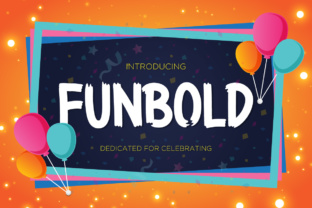
Funbold: A Hand-Brushed Display Font That Turns Your Projects Into Statements
If you've ever spent hours scrolling through font libraries looking for something that feels both playful and confident, you know the struggle. Many brush fonts lean too casual, while bold options can feel stiff. Funbold sits in that sweet spot—it’s a hand-brushed display typeface that manages to be energetic without losing readability. Created on paper and refined through actual brush strokes, each letter carries the slight imperfections that make handcrafted work feel human. That warmth is exactly what separates a generic design from one that connects.
Where Funbold Shines in Real-World Design
The beauty of Funbold lies in how naturally it fits into projects that need personality. It’s not a font you set body copy in (and that’s fine). Instead, it works best where you have something to say in a few words—headlines, logos, posters, product names, or callouts. Here are some scenarios where it genuinely makes a difference.
Branding for Small Businesses and Startups
Local coffee shops, bakeries, craft breweries, and boutique clothing stores often struggle to communicate their vibe through branding alone. A polished sans-serif might feel too corporate, while a handwritten font could look amateurish. Funbold bridges that gap. Its bold weight gives it authority, yet the uneven brush texture keeps it approachable. Imagine a craft brewery using Funbold for its beer labels: the name of the brew set thick and slightly irregular, paired with a clean sans-serif for the description. The contrast makes the label stand out on a crowded shelf. For a bakery, Funbold on a sign reading “Fresh Baked Daily” carries the warmth of a family recipe.
One observation: business owners often underestimate how much a font choice affects customer perception. A font that looks “fun” but is hard to read can backfire. Funbold’s letterforms stay clear enough for short phrases, so customers at a market stall or pop-up shop can read the board from a few meters away. That practical legibility, combined with the handmade look, builds trust quickly.
Event Posters and Flyers That Demand Attention
Music festivals, art exhibits, street fairs, and community workshops all rely on posters to grab passersby. These materials have a split second to stop someone scrolling on a phone or walking down a sidewalk. Funbold’s thick strokes and irregular edges create a visual anchor. It says “something exciting is happening here” without needing elaborate illustrations.
For example, a neighborhood block party flyer could feature “SUMMER JAM” in Funbold at the top, then use a lighter companion font for date and location. The boldness ensures the event name dominates the layout. Similarly, a poster for a children’s theater show could use Funbold for the title—it’s playful enough for kids but doesn’t feel childish, which matters when parents are making the decision to buy tickets.
Social Media Graphics and Video Thumbnails
Content creators, especially on Instagram, YouTube, and TikTok, rely on text overlays to hook viewers. A thumbnail that says “TOP 5 BAKING HACKS” needs to pop even when rendered tiny. Funbold’s weight helps maintain legibility at small sizes, while the brush texture adds a tactile quality that contrasts with flat digital designs. It works surprisingly well for both static posts and short animated text in video intros.
One content creator I know switched to Funbold for her recipe video titles and noticed more saves and shares. She attributes it to the font feeling “real” against her otherwise clean aesthetic. The slight irregularity of the brush strokes makes the text look like it was hand-lettered on a chalkboard, which fits the cozy kitchen vibe she cultivates.
Different Audiences, Different Benefits
Funbold isn’t a one-size-fits-all font, but its range is broader than you might expect. Different users will find different values depending on their field.
- Graphic designers appreciate the authenticity that comes from a font that began with actual brush on paper. It saves time—no need to create hand-lettering from scratch for every project. They can drop Funbold into a layout and get that handcrafted look immediately.
- Small business owners (many of whom aren't designers) value how Funbold gives their materials a professional finish without requiring custom illustration. A simple product label or menu board becomes distinctive with little effort.
- Event organizers benefit from its high visibility. Whether it’s a marathon banner or a farmers market sign, the bold strokes carry well over distance.
- Hobbyists and DIY enthusiasts use Funbold for scrapbooking, party invitations, and handmade cards. It elevates personal projects without feeling like a template.
An interesting observation: many educators and workshop leaders have started using Funbold in instructional materials. The friendly tone of the font reduces the intimidation factor when teaching something like cooking, crafting, or coding. A handout with a bold, hand-brushed title like “Let’s Make Sourdough” feels inviting, whereas a standard Arial title feels like a textbook.
Common Considerations Before Using Funbold
As with any tool, knowing when not to use it is as important as knowing when to reach for it. Here are a few things to keep in mind.
It’s a Display Font—Respect That
Funbold is not built for paragraphs. Setting long blocks of text in it will fatigue the eyes and dilute the impact. Save it for headlines, subtitles, and key phrases. Pair it with a clean, readable body font—a simple sans-serif like Open Sans or Lato works well. The contrast between the freeform brush strokes and the refined body type creates a balanced hierarchy.
Spacing and Letter Combinations
Because each letter was hand-brushed, some character pairs may have varying kerning. In certain combinations (like “VA” or “TA”), you might need to adjust spacing manually in your design software. Most modern tools allow manual kerning, so it’s a minor step. But if you’re working with a web app that doesn’t offer fine spacing controls, test the font with your specific word before committing.
Context Matters for Tone
Funbold leans playful but not juvenile. That makes it suitable for a wide age range. However, if your project needs a sleek, minimal, or ultra-professional look (like a law firm website or a medical report), this font will feel out of place. It thrives in casual, creative, and community-oriented contexts. Using it for a corporate white paper would be a mismatch.
File Format and Web Use
If you’re designing for print, you’ll likely get an OTF or TTF file. For web use, check if the font includes a web font format (WOFF/WOFF2) and whether your license covers embedding. Some foundries restrict certain uses. Always review the license terms, especially if you’re using Funbold for commercial projects like merchandise or app interfaces.
Strengths That Make It Worth Trying
Beyond the obvious aesthetic appeal, Funbold offers some practical strengths that regular fonts don’t.
- Authenticity in a digital world. Audiences are increasingly drawn to designs that feel human. Funbold’s paper-origin gives it a texture that no algorithm can replicate.
- Versatility across media. It works on printed posters, digital screens, stickers, signage, and even fabric (for T-shirt designs or tote bags).
- Time savings. Instead of commissioning hand-lettering for every project, designers can drop in Funbold and adjust the weight and size to fit. It delivers a bespoke look out of the box.
- Memorable impact. People remember a bold, unique font. If your brand or event title uses Funbold, it’s less likely to blend in with everything else.
One limitation worth noting: if you’re working on a project that requires a lot of text variations (multiple headlines in different sizes and colors), Funbold might not offer the extensive character set or stylistic alternates that more elaborate display fonts do. It’s not a complete system—it’s a focused tool for short, impactful statements.
Making the Most of Funbold in Your Workflow
If you decide to give Funbold a spin, start by collecting a few reference images of designs that already use bold brush fonts. Notice how they pair colors and spacing. Then try using Funbold for a single element—maybe a blog post title or a social media graphic. See how it feels. Does it draw attention? Does it match the voice of your content?
One practical tip: set the tracking (letter spacing) a little looser than you might for a serif font. Brush fonts can look cramped when letters are too close together, especially in all-caps settings. A small amount of breathing room improves readability while keeping the hand-done charm.
Also, consider using color overlays or gradient effects on Funbold. Its solid fills take to gradients well, creating depth without losing the brush texture. For print, a spot gloss or foil stamp over Funbold text can produce a striking finish.
Ultimately, Funbold is for anyone who wants their words to feel like they were written with enthusiasm. It’s not a silent background player—it’s a front-stage performer. Use it when you want your message to be heard, remembered, and enjoyed.