Ironworks: A Decorative Font Built for Fantasy, Branding, and Creative Workflows
Typography often sits at the intersection of function and atmosphere. A font is never just a set of characters; it carries the visual weight of a message before a single word is read. For creators working in fantasy-themed projects, immersive branding, or any context where voice and mood must align, choosing the right typeface becomes a strategic decision. Ironworks, a strong and decorative font created by Darrell Flood, offers a distinctive tool for those who need their text to evoke craftsmanship, legend, and permanence.
This article examines Ironworks not simply as a decorative asset, but as a component that can be integrated into real workflows—from early concepting to final production. Whether you are a game developer, a publisher of fantasy fiction, a small business owner building a thematic brand, or a content creator designing immersive environments, understanding how and when to use Ironworks can sharpen your visual communication and streamline your creative process.
What Ironworks Brings to a Project
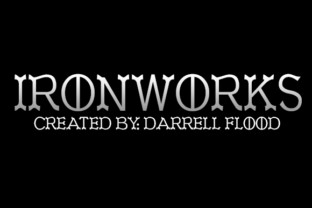
Ironworks is a display typeface built for impact. Its letterforms carry weight, with deliberate slab-like serifs, robust strokes, and a structure that suggests metalwork, stone carving, and ancient heraldry. This is not a font designed for long body copy; it is a font designed to command attention. It fits naturally into projects where the visual identity must communicate strength, tradition, and a sense of handcrafted detail.
Darrell Flood designed Ironworks with fantasy themes firmly in mind, but its utility extends beyond genre fiction. Think of any project that requires a visual anchor—a logo for a craft brewery, a title treatment for a podcast about mythology, or a heading system for a tabletop roleplaying game supplement. The font works because it does not whisper; it stamps a presence onto the page or screen.
For a professional or creator evaluating typefaces, Ironworks sits in the category of "hero" fonts. You reach for it when you need one clear, memorable statement. It pairs well with neutral, legible body fonts and works best when used sparingly and deliberately.
Where Ironworks Fits in a Broader Workflow
Integrating a decorative font like Ironworks into a project is not a matter of simply dropping it into a layout. Effective use requires planning, context, and an understanding of how it interacts with other elements.
Before the Project: Strategy and Preparation
Before you open any design software, consider where Ironworks will carry the most weight. This font is not a workhorse for paragraphs; it is a focal point for titles, headers, callouts, logos, and key visual moments. Early in the planning phase, map out the hierarchy of your content. Ask yourself: Which pieces of text need to be seen first? Which words should feel carved into the viewer's memory?
- Define the role: Is Ironworks your primary display font, or will it only appear on a cover or title screen?
- Test pairings early: Before committing, test Ironworks alongside your chosen body font. Look for contrast in weight, x-height, and mood. A clean, neutral sans-serif or a highly readable serif often works well as a companion.
- Consider the medium: Ironworks carries texture. On a screen, that texture reads differently than it does in print. Check legibility at your intended display sizes, especially if you plan to use it on merchandise, signage, or social media graphics.
During the Project: Implementation and Integration
Once your strategy is clear, implementation becomes a matter of discipline. Decorative fonts can easily overwhelm a layout if used too broadly. Restrict Ironworks to the elements that genuinely benefit from its character.
- Set strict usage rules: Decide exactly which text elements will use Ironworks. For example, chapter titles, product names, and key callouts. Everything else stays in your companion font.
- Adjust spacing and sizing: Strong decorative fonts often require manual kerning adjustments. Pay attention to letter spacing, especially in all-caps settings. Ironworks may need a small amount of tracking to improve readability at larger sizes.
- Design around the font: Let the font influence your layout choices. A bold, medieval-inspired typeface pairs well with textured backgrounds, muted color palettes, and illustrative elements. If your design feels inconsistent, the font may be clashing with other visual components.
- Leverage color and contrast: Ironworks holds up well when used in metallic tones, deep jewel tones, or high-contrast black-on-cream treatments. Experiment with color to enhance the sensory feel of the letterforms.
After the Project: Quality Control and Consistency
After publishing or printing, review how Ironworks performed across all your touchpoints. If you used it in a digital product, check how it renders on different devices and browsers. If it appears in a print run, look for consistent ink coverage and edge sharpness.
- Gather feedback: Ask colleagues or clients how the typeface reads at a glance. Does it convey the intended tone? Does it distract or enhance?
- Document your usage: If you plan to revisit this project or create similar work, save a small style guide noting how Ironworks was used, what sizes worked best, and which pairings were effective.
- Reuse across series: For ongoing projects—such as a book series, a game franchise, or a recurring event—maintaining typographic consistency helps build recognition. Ironworks can become part of your visual identity.
Practical Use Cases and Real Workflow Examples
To understand how Ironworks performs in practice, consider a few concrete scenarios where this font solves real creative problems.
Example 1: A Fantasy Tabletop RPG Supplement
A small publisher is creating a campaign setting for a popular tabletop system. The book needs a title that feels ancient and formidable. The body text is set in a clean serif for readability, but the chapter headers, section dividers, and the cover title use Ironworks. The font gives the book a consistent thematic weight. Readers immediately recognize the tone before they read a line. The publisher pairs Ironworks with a parchment-style background and a muted gold accent color. The result is a cohesive product that looks professional and genre-appropriate without needing expensive illustration work for every page.
Example 2: A Podcast Brand Identity
A history podcast focused on medieval metallurgy and arms wants a logo that communicates craftsmanship. Ironworks becomes the primary wordmark font. The designer uses it for the podcast title on the cover art, social media banners, and merchandise. For episode titles and show notes, they use a lighter sans-serif to avoid visual fatigue. The font choice immediately signals the show's niche and helps it stand out in a crowded feed. Listeners associate the visual brand with the show's content before a single episode is heard.
Example 3: A Small Business in the Craft Beverage Industry
A meadery or craft distillery wants labels that evoke tradition and artisanal quality. Ironworks appears on the main product label for the flagship offering. The font's structural weight mirrors the glass bottle and the handcrafted nature of the product. On the back label, a more readable typeface provides ingredients and story. The combination creates a premium feel while maintaining practical legibility for regulatory information.
Working With Other Tools and Assets
Ironworks does not exist in isolation. Its effectiveness depends on how it interacts with your broader toolset and creative choices.
- Layout software: Whether you use InDesign, Affinity Publisher, Canva, or Figma, test how Ironworks handles at different scales. Some software handles decorative fonts better than others, particularly when it comes to anti-aliasing and rendering at small sizes.
- Design assets: Ironworks pairs naturally with aged textures, borders, and ornamental elements. If you are building a medieval or fantasy theme, consider icons, shields, or flourishes that echo the font's visual language.
- Collaboration with other creatives: If you hand off files to a developer, an illustrator, or a printer, ensure they have access to the font license and know how the font should be used. A style guide or a simple note about placement can save revision time.
Preparing for Long-Term Use
If Ironworks becomes a recurring element in your work, take steps to maintain quality over time.
- License properly: Ensure you have the correct license for your intended use—whether commercial, personal, or web-based. Darrell Flood's licensing terms are clear, and respecting them supports ongoing type design.
- Backup your font files: Keep a copy of Ironworks in your active font manager. If you work across multiple machines, use a consistent sync method.
- Build templates: For repeated formats—like video title screens, book interiors, or social media templates—pre-build documents with Ironworks already placed and sized. This reduces setup time and enforces consistency.
- Revisit your choices: After using Ironworks for several months, evaluate whether it still serves your project. As brands evolve, typography may need to shift. A font that felt perfect at launch may later feel too heavy or too specific.
Organizing Your Font Library for Efficiency
One practical challenge with decorative fonts is that they accumulate quickly. To use Ironworks efficiently, keep your font library organized from the start.
- Tag Ironworks by category: "Fantasy," "Display," "Serif," "Decorative."
- Create a shortlist of go-to pairings. Note which body fonts you have tested with Ironworks and found effective.
- Remove unused or duplicate fonts periodically. A clean library reduces decision fatigue when you are in the middle of a project.
Final Observations on Ironworks
Ironworks by Darrell Flood is not a font you use every day. It is a font you use when the moment calls for something solid, something that feels like it was forged rather than typed. Its place in a workflow is that of a specialist—called in for specific, high-impact roles. When you plan around its strengths, respect its limitations, and pair it thoughtfully with other typefaces and design elements, Ironworks becomes more than decoration. It becomes a functional part of your visual process, capable of carrying meaning and memory in a way that neutral fonts cannot.
Whether you are building a world for a game, a brand for a product, or a visual identity for a personal project, Ironworks offers a tool that marries aesthetic weight with practical purpose. Use it deliberately, integrate it with intention, and it will serve your work well through every stage of the creative process.