A Font That Feels Like a Scene
Some typefaces are quiet. They sit back, let the message speak, and fade into the background. Deadway is not one of those fonts. From the first glance, it pulls you into a world—ragged, weathered, and eerily still. This is a display font that doesn't just sit on a page; it sets a tone. If your project calls for a sense of decay, survival, or something just a little off the beaten path, Deadway delivers without trying too hard.
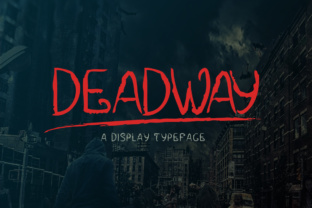
Designed with texture front and center, every letterform carries a handmade, worn quality. It feels like it was stamped onto paper with a rusty press or carved into wood that has seen decades of weather. There is nothing clean or polished about it, and that is exactly the point. Deadway speaks to designers, small business owners, and content creators who want their visuals to feel immediate, raw, and unforgettable.
The Look and Feel of Decay and Grit
Deadway is a display font, which means it is built for impact rather than long stretches of body text. Its characters are irregular, uneven, and full of character. Strokes look distressed, edges are rough, and the overall impression is one of abandonment reclaimed by nature. Think cracked asphalt, rusted signs, and handwritten warnings on plywood. That is the world this typeface inhabits.
Visually, Deadway leans into the post-apocalyptic aesthetic without being cartoonish. It has restraint. The texture feels organic, not like a filter was slapped on a clean vector. This makes it a great choice for projects that need an authentic, gritty vibe—whether you are designing a poster for a themed event, packaging for a craft product, or a book cover that hints at survival and mystery.
Because it is a textured font, readability takes a back seat to personality. You won't use Deadway for a 500-word article or a corporate memo. But for short headlines, logos, titles, and callouts, it commands attention in a way that clean sans serifs simply cannot.
Where Deadway Earns Its Keep
Deadway is not a font for every job, but for the jobs it fits, there is no substitute. Here are the places where it shines brightest:
- Brand identity for niche businesses – If you run a brand built around outdoor adventure, survival gear, horror entertainment, or underground culture, Deadway gives your logo and collateral an instant visual hook. It says "we don't follow the mainstream" without screaming it.
- Editorial and book design – Horror novels, dystopian fiction, or any publication that needs a cover that feels lived-in benefits from this typeface. It pairs especially well with minimalist layouts where the font can take center stage.
- Packaging design – Products that want to evoke authenticity, heritage, or a rugged handcrafted feel can use Deadway to great effect. Coffee labels, hot sauce, candles, or artisan goods all gain an edge when this font appears on the package.
- Social media graphics – In a crowded feed, texture stands out. Deadway works well for quote cards, event announcements, and teaser graphics that need to stop the scroll.
- Web design headers – While not for body text, using Deadway as a headline font on a landing page or a brand site creates an immediate atmosphere, especially when paired with muted colors and gritty imagery.
- Merchandise and apparel – T-shirts, stickers, posters, and print-on-demand products benefit from the handmade feel of Deadway. It looks like it belongs on a worn-in hoodie or a concert flyer.
Hierarchy, Mood, and Message: What Deadway Does for a Design
Typography is never just about letters. It carries weight, emotion, and subtext. Deadway shifts the visual hierarchy of any layout by dominating the attention. When you place this font in a headline, it becomes the anchor. Everything else—images, supporting text, white space—works around it. That is both its strength and its constraint.
For brand perception, Deadway communicates authenticity and a certain kind of honesty. It does not pretend to be perfect. It embraces imperfection, which resonates with audiences tired of glossy, overproduced visuals. If your target audience values grit, craftsmanship, or counterculture, this font builds an immediate connection.
Consistency is another area where Deadway shines. Using it across a website header, a product label, and a social media graphic ties those pieces together visually. Even if the rest of the design changes, the font acts as a consistent thread that reinforces the brand identity.
Engagement often comes down to stopping someone long enough to read. Deadway does that. Its unusual texture and rugged personality create a moment of pause. People look twice. In a fast-moving digital world, that extra second of attention is gold.
Choosing Deadway Without Second-Guessing Yourself
Bringing a font like Deadway into your workflow takes more than liking how it looks. Here is practical guidance to help you decide if it is the right fit—and how to use it well.
Evaluate your project's tone first
Ask yourself whether your project genuinely benefits from a distressed, eerie, or post-apocalyptic feel. If you are designing for a tech startup, a wellness brand, or a financial service, Deadway will feel forced. But if you are working on a horror-themed podcast cover, a dystopian game UI, or a craft brewery label with a rugged story, you are in the right territory.
Test font pairings early
Deadway works best when it is the star. Pair it with clean, simple fonts that do not compete for attention. A neutral sans serif like a basic Helvetica or a quiet serif for body text creates balance. The contrast between rough and smooth makes both fonts look better. Avoid pairing Deadway with another textured or handwritten font—it gets muddy fast.
Review the included styles and weights
Before committing, check what comes in the font package. Some display fonts offer only a single weight or style, which may limit how you use them across different media. Deadway typically includes enough variation for headlines and key accents, but confirm that it covers the characters and glyphs you need—especially if you work with multiple languages or special punctuation.
Account for readability at different sizes
Because Deadway is textured and distressed, it can become hard to read at small sizes. Use it at 36 points or larger for print, and test it at various screen sizes for digital use. A headline that looks bold on a desktop monitor may become illegible on a phone screen. Always preview your design at the actual size your audience will see it.
Check the commercial license
If you are using Deadway for client work, product packaging, or any revenue-generating project, make sure you have the right license. Many premium fonts offer standard and extended commercial licenses. Read the terms carefully. A single purchase might cover a personal blog but not a product line sold in stores. When in doubt, reach out to the foundry or marketplace for clarification.
Use Deadway as part of a broader design system
For small business owners and entrepreneurs building a brand, think about how Deadway fits into your full toolkit. Maybe it becomes your primary headline font while a simpler secondary font handles everything else. Maybe it only appears on one product line or seasonal campaign. You do not need to use it everywhere for it to be effective. In fact, using it sparingly often makes it more powerful.
Real-World Examples That Work
Imagine a small-batch hot sauce brand. The label features a bold Deadway "HOT" across the front, paired with a clean sans serif for ingredients and story text. The contrast feels deliberate. The brand comes across as artisanal but not precious, bold but not aggressive. Customers pick it up because the label tells a story before they even taste the product.
Or consider a digital course creator in the survival skills space. The landing page uses Deadway for the course title and module headers, with a simple serif for lesson descriptions. The aesthetic reinforces the content—this is not a polished corporate course; it is practical, grounded, and real.
For publishers, Deadway works beautifully on a dystopian novel cover. The author's name might appear in a clean font, while the title uses Deadway in large, distressed lettering. The cover stands out on a shelf or a thumbnail because it carries texture and mood that sleek fonts cannot replicate.
Making the Most of a Font with Edge
Deadway is not for every project, and that is exactly what makes it valuable. Fonts that try to be everything end up being nothing. Deadway knows what it is: a textured, eerie, rugged display typeface that thrives in spaces where atmosphere matters more than neutrality.
If you are a designer, marketer, or creator who works on projects that need visual tension and authenticity, this font deserves a spot in your library. Use it deliberately. Pair it carefully. And do not be afraid to let it take up space. A font like Deadway does its best work when you give it room to breathe and a context that matches its voice.