Kadence: The Display Font That Proves You Don’t Have to Choose Between Sleek and Rustic
For years, designers have been forced into a false dichotomy. You either go clean, modern, and minimal — or you embrace warmth, texture, and imperfection. Sleek or rustic. Polished or raw. It has felt like a binary choice, with little room for overlap. Then along came Kadence, a display font that dismantles that divide entirely. Kadence is not a compromise between two aesthetics; it is a deliberate, wonderfully offbeat fusion of both. It manages to feel simultaneously refined and earthy, contemporary and timeless. This article explores what makes Kadence such a unique typographic tool, how it performs across different projects, and why it might be the missing piece in your design workflow.
What Exactly Makes Kadence Different?
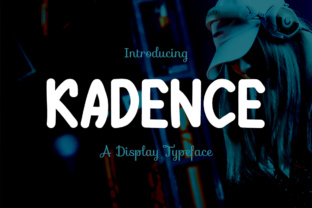
Most display fonts commit to a single personality. A geometric sans-serif screams precision and efficiency. A hand-drawn script shouts authenticity and spontaneity. Kadence, by contrast, holds two opposing energies in tension. Its letterforms carry the clean bone structure you would expect from a modern sans-serif — crisp terminals, consistent stroke weights, and controlled proportions. Yet at the same time, there is an unmistakable roughness at the edges, a subtle irregularity that keeps it from feeling sterile or machine-made. This duality is not accidental. It is engineered into every glyph. The result is a typeface that feels both deliberate and organic, like something carved by hand but finished with a laser cutter.
This combination gives Kadence a rare kind of visual depth. It does not flatten into a single note when scaled up or used in bold weights. Instead, the tension between sleekness and rusticity becomes more pronounced, more interesting. At large sizes, you notice the slight unevenness in stroke endings, the quiet quirk in a lowercase a or e. At smaller sizes, those same details read as texture rather than noise, keeping the typeface legible without sacrificing character. For designers who are tired of fonts that feel one-dimensional, Kadence offers something genuinely layered.
Where Kadence Shines in Real Projects
Because Kadence rides the line between two worlds, it opens up creative territory that more conventional fonts cannot reach. It is particularly effective in branding for businesses that want to communicate both professionalism and approachability. A coffee roastery, for example, might use Kadence on packaging to signal artisanal care without looking amateurish. A boutique hotel could deploy it in signage to suggest modern comfort rooted in local tradition. A tech startup aiming for a human-centered brand might use Kadence to soften an otherwise cold interface. The font’s flexibility allows it to serve as a bridge between what a brand does and how it wants to be perceived.
Beyond branding, Kadence performs exceptionally well in editorial and web contexts where headings need to carry personality. Because it is a display font, it is best used for headlines, titles, pull quotes, and other large-format applications. Pair it with a clean, neutral body typeface — something like Inter, Source Sans, or Merriweather — and the contrast will elevate both typographic layers. The body text provides readability and structure, while Kadence adds a focal point of visual interest. This pairing strategy is one of the most practical ways to bring Kadence into a project without overwhelming the layout.
Another strong use case is in packaging and product design. Consumer goods benefit from typography that feels tactile, even when printed on mass-produced materials. Kadence’s rustic undertones evoke craftsmanship and authenticity, qualities that resonate strongly in markets like natural skincare, craft beverages, and small-batch food products. When printed or embossed, the font’s subtle irregularities catch light and shadow in ways that perfectly flat fonts cannot, adding a tactile dimension to the physical object.
The Design Philosophy Behind the Duality
To understand why Kadence works so well, it helps to look at the design philosophy that drives it. The term sleek rustic might sound like an oxymoron, but it describes a growing current in contemporary design. People are becoming more skeptical of hyper-polished aesthetics. The perfectly smooth, perfectly symmetrical look that dominated the 2010s now feels impersonal to many audiences. At the same time, pure rustic or handmade styles can feel limited in scope, too tied to a specific niche or trend. Kadence answers this cultural shift by offering a middle path. It keeps enough polish to feel credible and versatile, while retaining enough roughness to feel honest and approachable.
This philosophy extends to the font’s stylistic range. Kadence is not a single weight or cut; it is available in a number of styles that allow designers to dial the rustic-sleek balance up or down depending on the application. Lighter weights lean toward the sleek side, with the rough edges reading more as texture than disruption. Heavier weights and more expressive styles amplify the rustic character, making the font feel bolder and more hand-hewn. This spectrum means you can use Kadence across a campaign — from delicate, refined headlines to chunky, attention-grabbing statements — while maintaining a consistent visual language. It is not a one-trick pony; it is a system.
Practical Benefits for Designers and Brands
Beyond its aesthetic appeal, Kadence offers several practical advantages that make it a smart choice for working designers. First, it solves the problem of visual monotony. Many display fonts rely on a single gimmick — a dramatic slant, an exaggerated serif, an unusual x-height — that becomes tiresome after the first few uses. Kadence’s appeal lies in its subtlety. The rustic details are present but not overwhelming, which means the font remains engaging across multiple touchpoints. A headline set in Kadence still feels fresh the tenth time you see it.
Second, Kadence is highly adaptable to different media. It works well in print, where its textured edges add richness to ink on paper. It also translates effectively to digital screens, provided you pay attention to size and resolution. At large display sizes on high-resolution screens, the rustic details come through beautifully. At smaller sizes or lower resolutions, you may want to use a smoother style to maintain legibility. This is not a limitation so much as a characteristic to be aware of. Like any display font, Kadence performs best when used at sizes where its details can breathe.
Third, Kadence helps brands stand out in a crowded marketplace. In a world where so many logos and headlines rely on the same handful of overused fonts, choosing a distinctive typeface like Kadence signals intentionality. It tells your audience that you care about the details and that you are not afraid to be different. For small businesses and independent creators especially, this kind of typographic distinction can be a powerful differentiator without requiring a massive budget.
Who Should Consider Using Kadence?
Kadence is not for every project. If you need a strictly utilitarian typeface for a dense block of body text, look elsewhere. But if you are working on anything that requires a headline, a logo, a poster, packaging, or a hero section, Kadence deserves serious consideration. It is particularly well suited for:
- Brand identities that want to blend modernity with warmth
- Packaging design for products that emphasize craftsmanship or natural ingredients
- Editorial layouts where headings need to command attention without shouting
- Website hero sections and landing pages that need immediate visual personality
- Social media graphics where a distinctive font helps content stand out in a feed
- Signage and environmental design where legibility and character matter equally
Designers who work across multiple industries will find Kadence especially valuable because of its flexibility. A single license can serve projects ranging from organic food branding to modern architecture publications. That kind of range is rare in a display font and makes Kadence a smart investment for freelance designers and studios alike.
Things to Consider Before You Commit
No font is perfect for every situation, and Kadence is no exception. One factor to weigh is its suitability for extended reading. Because it is a display font, it is not optimized for long paragraphs. The rustic details that look charming at 48 points can become distracting at 14 points. Plan to use Kadence for headlines, subheadings, and short emphatic text, and pair it with a more traditional body font for longer passages.
Another consideration is licensing and file format. Make sure you download Kadence from a reputable foundry or distributor, and check the license terms for web use, commercial projects, and embedding. Some display fonts come with restrictions that can complicate usage in certain contexts. Also, confirm that the styles you need — such as bold, italic, or condensed — are available in the version you purchase. Having a full family of weights and styles gives you much more creative freedom than a single cut.
Finally, think about your audience. Kadence’s blend of sleek and rustic will resonate strongly with audiences who value authenticity, craftsmanship, and modern design with a human touch. It may feel out of place in hyper-corporate or ultra-minimalist contexts where pure geometric precision is the norm. Understanding the emotional tone you want to strike will help you decide whether Kadence is the right vehicle for your message.
Observations from Real-World Use
Designers who have adopted Kadence often comment on how it changes the way they approach layout. Because the font carries so much inherent personality, it encourages a more thoughtful use of whitespace, color, and supporting imagery. A headline set in Kadence does not need elaborate ornamentation or busy backgrounds — it holds its own. This can actually simplify the design process, as you spend less time compensating for a neutral typeface and more time letting the font do the work.
Another observation is that Kadence tends to photograph and render well in context shots. For designers who need to present mockups or share work on social media, the font’s textured edges and balanced proportions look compelling in lifestyle imagery. This is a small but meaningful advantage in a visual-first world where the presentation of your work matters almost as much as the work itself.
There is also a surprising emotional response that Kadence often elicits from non-designers. People who are not trained in typography still notice something different about it — they just cannot always articulate what. That subconscious recognition is valuable for brands because it creates a sense of distinctiveness without feeling forced. Kadence does not scream for attention; it earns it through quiet confidence.
Integrating Kadence into Your Workflow
If you are considering adding Kadence to your toolkit, start by experimenting with it in low-stakes projects. Try it in a social media graphic, a presentation title slide, or a personal project. See how it interacts with your go-to body fonts and your preferred color palettes. Pay attention to how it behaves at different sizes and in different media. This hands-on exploration will give you a much better sense of Kadence’s strengths and limitations than any spec sheet can.
Once you are comfortable, begin introducing it into client work where the aesthetic alignment is clear. Kadence is especially effective in mood boards and concept presentations because it signals a sophisticated design sensibility right from the start. Clients may not know why the typography feels right, but they will feel it. And in the end, that emotional resonance is what separates good design from great design.
Kadence is a reminder that the best design tools do not force you into narrow categories. They expand your options. They let you hold two ideas — sleek and rustic, modern and timeless, polished and raw — in the same hand. That is a rare and valuable thing. Whether you are a seasoned designer or just beginning to build your typographic vocabulary, Kadence deserves a place in your considerations. It may not be the font you use for everything, but it will be the font you reach for when you need something that refuses to be neatly labeled.