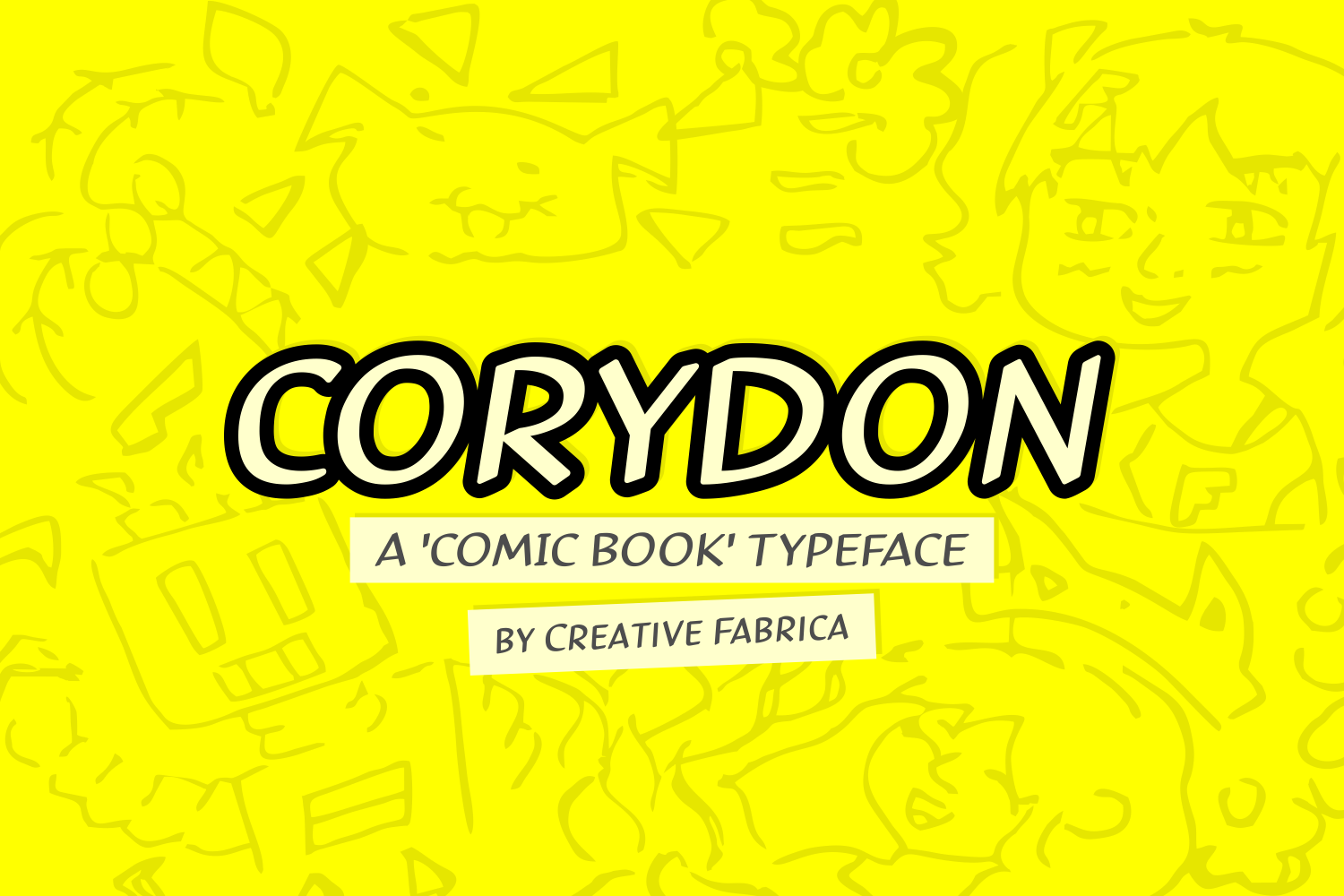
Corydon: A Clean Comic Book Font with a Personal Touch
If you have ever tried to set a large block of text in a playful display font, you have likely run into readability problems. Many fun, hand-drawn typefaces look charming in a headline but become exhausting to read after a few sentences. Corydon was designed to solve exactly that tension. It is a clean comic book style font that keeps its personality even when you need to set paragraphs of small text. Whether you are laying out a comic, designing a flyer, or formatting a magazine spread, Corydon offers a balance that is harder to find than you might expect.
What Makes Corydon Different from Other Comic Style Fonts
At first glance, Corydon may look like a straightforward sans serif. Its letterforms are clean, uniform, and easy on the eyes. But spend a few moments looking closer, and you will notice the subtle irregularities that give it away: a slight variation in stroke weight here, a gentle curve there. These details come from the fact that the font is drawn by hand, not generated by a machine. That handcrafted quality gives Corydon a warmth and personal touch that most sans serif fonts simply cannot replicate.
This combination is surprisingly rare. Most comic book fonts lean heavily into extreme stylization, making them great for short bursts of text but poor choices for anything longer. Corydon takes the opposite approach. It keeps the friendly, approachable spirit of a hand-drawn font while maintaining the clarity and structure you would expect from a well-made sans serif. The result is a typeface that feels both professional and personal at the same time.
Optimized for Large Quantities of Small Text
One of the first things you will notice when working with Corydon is how well it handles small sizes. This is not an accident. The font was specifically optimized for situations where you need to fit a lot of text into a compact space without sacrificing readability. The x-height is generous, the letter spacing is carefully tuned, and the character shapes remain distinct even at smaller point sizes.
For anyone who has struggled to make a playful design work while still including enough copy, this is a meaningful advantage. You do not have to choose between a friendly look and a readable layout. Corydon lets you have both.
A Personal Alternative to Standard Sans Serifs
There are thousands of sans serif fonts available, and most of them look interchangeable. Corydon stands apart because of that hand-drawn quality. When you use it, your text carries a subtle human touch that signals care and intention. This can be especially valuable for projects where you want to build a connection with your audience without resorting to overly decorative or novelty typefaces.
Comic Books and Sequential Art
Naturally, a comic book style font works well in comics. But Corydon is particularly suited for indie comics, webcomics, and graphic novels that require dialogue-heavy panels or descriptive narration blocks. Its readability at small sizes means readers will not tire of it page after page. And its hand-drawn character ensures it fits visually with art that is also created by hand, even if the lettering is digital.
Flyers, Posters, and Print Marketing
When you are designing a flyer or poster, you often have a limited amount of space to communicate a message. Corydon allows you to include more text without your design feeling cluttered or hard to read. It works especially well for event posters, community announcements, and small business promotions where you want to convey a friendly, approachable tone without looking amateurish.
A local café advertising a weekly open mic night, for example, could use Corydon for the event details, times, and location. The font would keep the information clear while reinforcing a casual, welcoming atmosphere. Similarly, a freelance illustrator promoting a portfolio showcase could rely on Corydon to present both their name and a short artist statement in a cohesive, readable way.
Magazines, Zines, and Editorial Layouts
Magazines and zines often mix display typography with long-form reading. Corydon is a strong candidate for sidebars, captions, pull quotes, and shorter articles where you want the text to feel lively but not distracting. In a lifestyle magazine, for instance, you might use Corydon for a recurring column or a series of short interviews. The font adds personality without overwhelming the content.
Cards, Invitations, and Personal Correspondence
Because of its warm, hand-drawn quality, Corydon is a natural choice for greeting cards, save-the-dates, and personalized stationery. It communicates effort and individuality, which is exactly what you want when reaching out to someone personally. A wedding invitation set in Corydon, for example, would feel modern yet intimate, especially when paired with a simple serif for the formal details.
Digital Content and Web Use
Corydon also works well in digital contexts where you need a friendly but readable typeface. Blog headers, social media graphics, email newsletters, and landing page copy can all benefit from its approachable style. It is particularly effective for brands that want to project a creative, human-centered image without sacrificing professionalism. A small business selling handmade goods, for example, could use Corydon throughout their website to reinforce a handmade ethos.
Pairing with Other Fonts
Corydon pairs well with simple serifs and neutral sans serifs. Because it carries a distinct personality, it is best used as the primary text font in a project, with a more restrained typeface reserved for supporting roles. Avoid pairing it with another highly stylized font, as the result can feel chaotic rather than intentional. A clean geometric sans or a classic old-style serif tends to complement Corydon without competing for attention.
Licensing and File Formats
Before committing to Corydon for a commercial project, make sure you understand the licensing terms. Like many hand-drawn fonts, it may be offered under different licenses for personal versus commercial use. Check whether the font includes the weights and character sets you need, especially if you require extended language support or special punctuation. Also confirm that the file format works with your design software; most modern fonts come in OTF or TTF formats, which are widely supported.
Testing for Your Specific Use Case
No matter how good a font looks in a preview, it is always wise to test it in your actual layout before committing. Set a realistic block of text at the size you plan to use, and print it out if the project is print-based. Look for any letter combinations that feel awkward or spacing issues that become apparent only at scale. This is especially important with hand-drawn fonts, where individual character shapes may not follow the rigid uniformity of a purely mechanical typeface.
Consistency Across Your Brand or Project
If you are using Corydon as part of a brand identity, consider how it will be applied across different materials. A font that works beautifully on a poster may feel out of place in a formal proposal or a product specification sheet. Corydon is best suited for projects where the overall tone is friendly, creative, and approachable. If your brand voice shifts toward more serious or technical topics, you may want to reserve Corydon for the parts of your communication that need warmth and personality.
Who Benefits Most from Using Corydon
Corydon is a great match for freelancers, small business owners, and independent creators who produce their own marketing materials. It is also well suited for educators designing classroom handouts, bloggers creating visual content, and hobbyists working on personal projects like zines or custom invitations. If you have ever felt limited by the standard font options in your design software, Corydon offers a refreshing alternative that does not compromise on readability.
Professionals in publishing, print design, and branding will also find value in Corydon as a reliable workhorse font with a distinctive voice. It can serve as a go-to typeface for projects that require both personality and practicality, saving you the time of searching for a font that fits both criteria.
Making the Most of Corydon in Your Work
The best way to get comfortable with Corydon is to use it in a real project. Start with something small, such as a single-page flyer or a social media graphic. Pay attention to how the font behaves at different sizes and in combination with other elements. Experiment with tracking and leading to find the settings that feel most natural. Over time, you will develop a sense for when Corydon is the right choice and when another typeface would serve better.
Remember that a font is ultimately a tool. Corydon is a particularly versatile one, but it still works best when you have a clear idea of what you want to communicate. Let its hand-drawn warmth support your message rather than overpower it. When used thoughtfully, Corydon can make your text feel more human, more approachable, and more memorable without sacrificing the clarity your audience needs.